The e-learning content development is a success when the instructional design, structured planning, content for the learners, appropriate technology, and continuous evaluation are all aligned with disciplined e-learning project management. This mix creates compelling, scalable, and quantifiable learning experiences that achieve tangible organisational goals from a myriad of training resources.
What Is E-Learning Content Development?
The structured process of converting the knowledge of a subject matter expert into a digital product, such as a video, interactive modules, assessment, or job aids, to develop specific measurable skills among employees. It utilises instructional design, project planning, and technology to create captivating, not just informative, courses. It’s a process that corporate L&D teams use to create structured online courses from compliance manuals, product knowledge, or leadership frameworks.
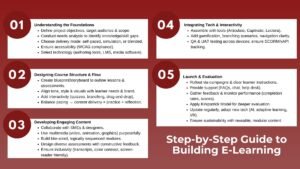
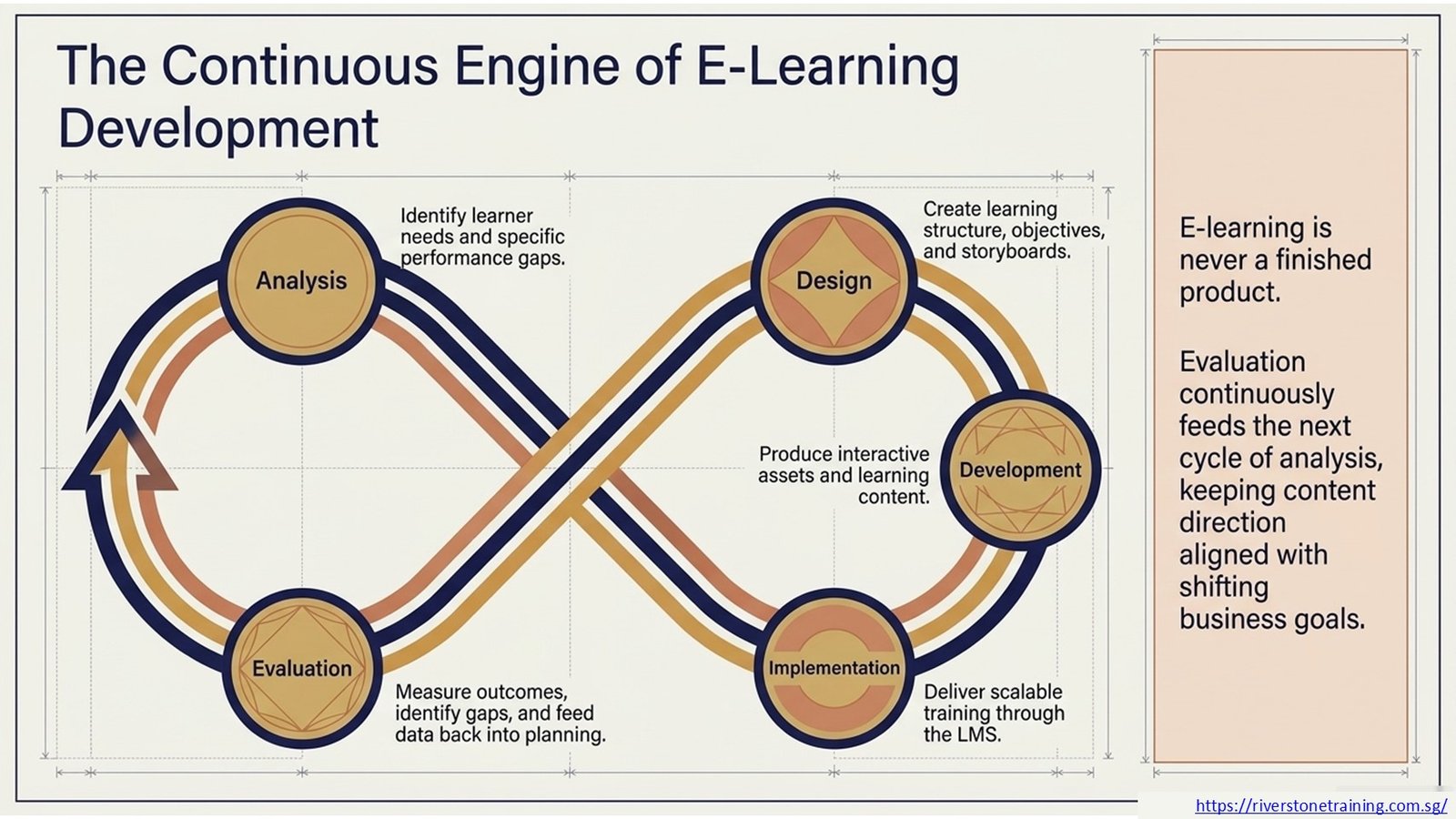
Unlike slide decks or lectures recorded in front of a lecture screen, the process of producing professional e-learning content is a well-defined process that involves analysis, design, development, implementation, and evaluation. The final course maintains direction toward business goals as each stage has an outcome that is used in the subsequent stage. Organisations that make training a formalised discipline, as opposed to a one-off job, will regularly have training that results in behaviour change in the workplace.
| Stage | Purpose |
| Analysis | Identify learner needs and performance gaps |
| Design | Create learning structure, objectives, and storyboards |
| Development | Produce learning content and interactive assets |
| Implementation | Deliver training through the LMS |
| Evaluation | Measure learning outcomes and identify gaps |
Why Is Planning Important Before Developing E-Learning Content?
Planning is important because it avoids the time spent in the development process on material that does not align with the needs of learners or the objectives of the business. Before development, a needs analysis process determines the learners, the performance gap, and the most effective way to address the gap, using a video, interactive scenario, or job aid. This can result in changes to courses late in the production process, because this is much more costly than a change early in the planning phase.
A good plan includes scope, time, and budget parameters, which help to align stakeholders from the beginning. For instance, an HR team or a legal team who are developing a new policy course can take advantage of a policy plan that stipulates the review cycles for HR and legal prior to development. This level of transparency helps to cut down on the bickering that usually slows down e-learning projects.
How Does E-Learning Project Management Improve Development?
Using e-learning project management enhances development by aligning instructional designers, developers, subject matter experts, and reviewers on a development schedule and set of deliverables. A dedicated project manager keeps a log of milestones, including storyboard approval, prototype review, and final quality assurance, avoiding any one milestone from slowing the whole course down. Coordination is particularly useful if several departments are providing content for the same training programme.
Good project management also regulates the delivery of the completed product to the learners, its deployment and monitoring through the LMS. Effective e-learning project management coordinated with LMS delivery planning helps organisations maintain consistent rollout schedules across departments and locations, so courses launch on time and reach learners without technical friction.
| Responsibility | Benefit |
| Project Planning | Keeps timelines and deliverables on track |
| Resource Coordination | Improves collaboration across contributors |
| Quality Control | Maintains consistent content standards |
| Stakeholder Communication | Reduces delays and last-minute rework |
What Role Does Instructional Design Play in Learning Success?
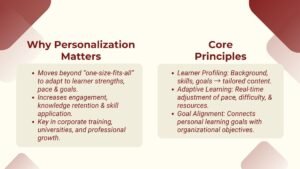
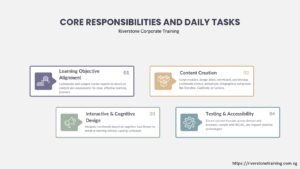
Instructional design is the key to learning success as it is the process that turns raw information into a sequence to facilitate the way in which an adult learns. Instructional designers establish learning goals, plan the content, and select activities that promote retention and not passive reading. This is the difference between one course that affects an individual’s performance and one that simply conveys information.
In reality, instructional designers tend to collaborate with the subject matter experts in determining what information is needed in a course and what is superfluous, as the latter may affect the course completion rate. For example, a newly designed training for new managers could supplant a long policy document with a scenario-based situation where the learner can rehearse a challenging conversation. This feature design meets the engagement and knowledge transfer requirements.
| Element | Learning Benefit |
| Learning Objectives | Clear learner expectations and focus |
| Storyboarding | Organised course flow before production |
| Interactive Activities | Higher engagement and active practice |
| Assessments | Measure knowledge retention and application |
How Can Learning Objectives Improve Content Quality?
Learning objectives enhance the quality of content by providing a clear purpose for each piece of content, supporting developers to make decisions about what to include or remove. If your objectives are written in measurable terms (e.g., identifying key warning signs of a phishing email), then it is possible to create assessments that directly test the objectives you teach. If they are not included, content becomes more expansive, covering all that appears important but is not necessary for the learner.
Objectives also influence decisions regarding the design of multimedia and interactive activities, because a skills-based objective will require activities for practice, whereas a knowledge-based objective will only require a brief explanatory video. Teams that write objectives prior to storyboarding tend to get tighter courses with focus. This discipline cuts down on development time because there is a standard that reviewers can check the content against.
Why Is Learner Engagement Important in E-Learning?
Engagement of the learner is important because if the learner is not engaged, he or she will skim the content and not retain it, and no learning will be achieved, even if it is accurate. Engagement techniques are used, such as branching scenarios, examples of relevant workplace scenarios, and varying media to ensure that the audience is engaged and actively processing rather than passively clicking through screens. In corporate training, there is a direct link between engagement rates and completion rates and knowledge retention.
Engagement isn’t tacked on the end; it must be part of the learning design from the beginning. A sales training course that begins with a realistic customer objection is much more effective than a sales training course that starts with an overview of the policy. The engagement design drive also prevents expensive reworking throughout development.
How Do Multimedia and Interactive Activities Improve Learning?
The use of multimedia and interactive activities enhances learning by delivering information in several ways, enabling various learning styles, and helping retain information due to engaging activities. Video-based learning can be effective in showing procedures or providing modelling of conversations, and interactive simulations can be effective in practicing decisions in a low-risk environment. If the course is not made up entirely of one format, but rather two or three, it helps to keep the learners engaged in the course for longer.
There are also interactive features like branching scenarios, drag-and-drop activities, knowledge checks, and more, providing immediate feedback to learners, which deepens learning better than simply watching videos. A compliance course that gives a branching scenario of the consequences of violating the policy, as opposed to a course that just lists the policy, will be remembered longer. The use of multimedia should always enhance the learning objective and not simply add color and variety to the lessons.
What Technologies Support Successful E-Learning Development?
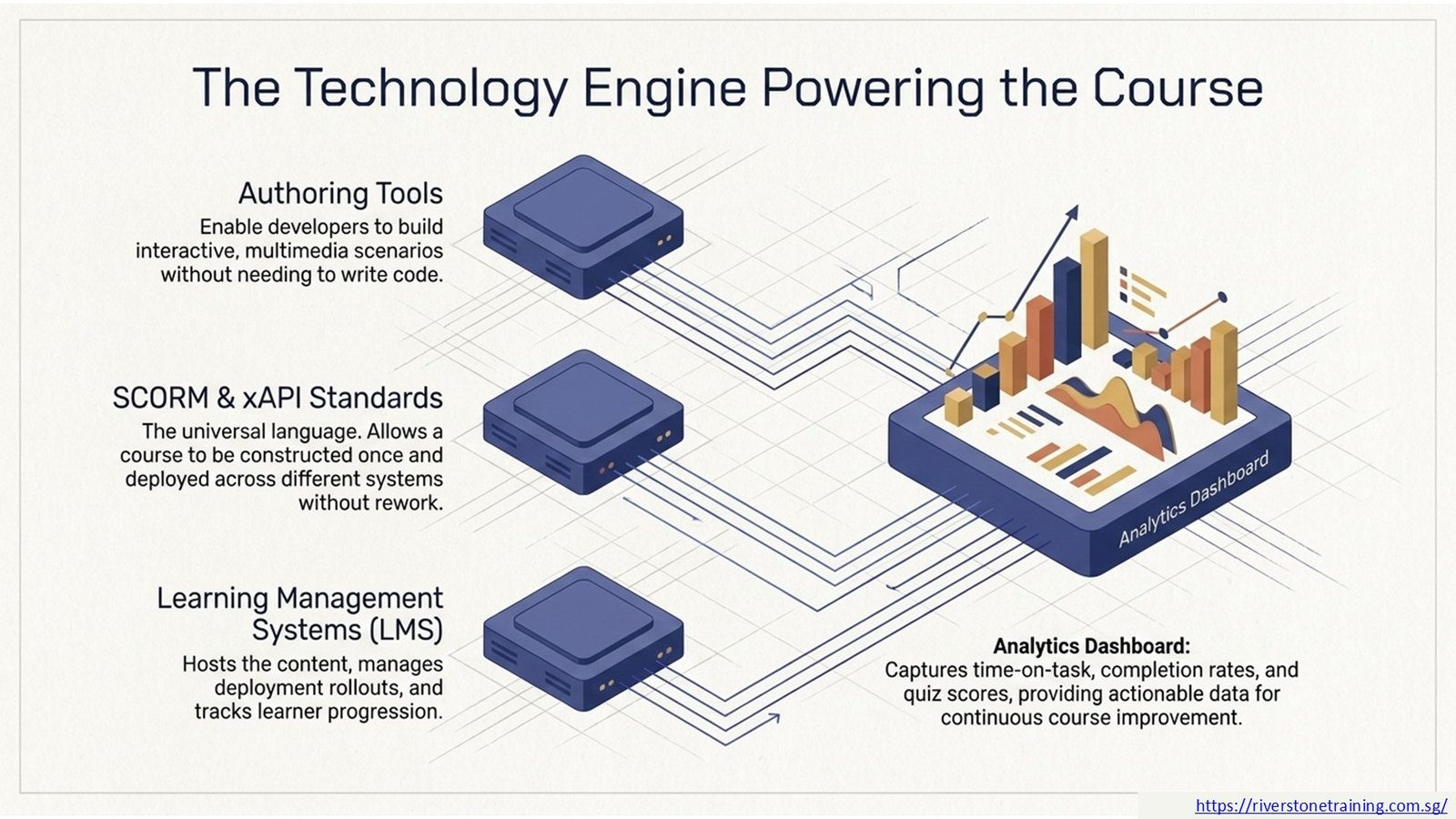
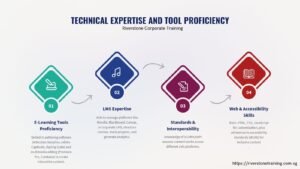
Authoring tools for developing interactive content, Learning Management Systems for hosting and tracking learning courses, and SCORM or xAPI standards for enabling course completion and performance reporting back to the LMS support successful e-learning development. Authoring tools enable 21st-century developers to create interactive scenarios and assessments without coding. One of the most notable features of SCORM is its ability to be compliant and can be deployed on different LMS without rework, a course constructed once.
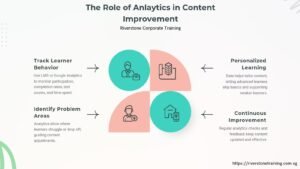
In addition to authoring and hosting, organisations are now leveraging analytics dashboards to analyse completion rates, quiz scores, and time-on-task information, all of which can be used to make improvements to their courses. Tools like video hosting, screen recording and accessibility checks support the creation of high-quality, accessible video content. The selection of the appropriate combination of tools will depend on the organisation’s LMS, devices and reporting needs.
How Can Assessments Measure Learning Effectiveness?
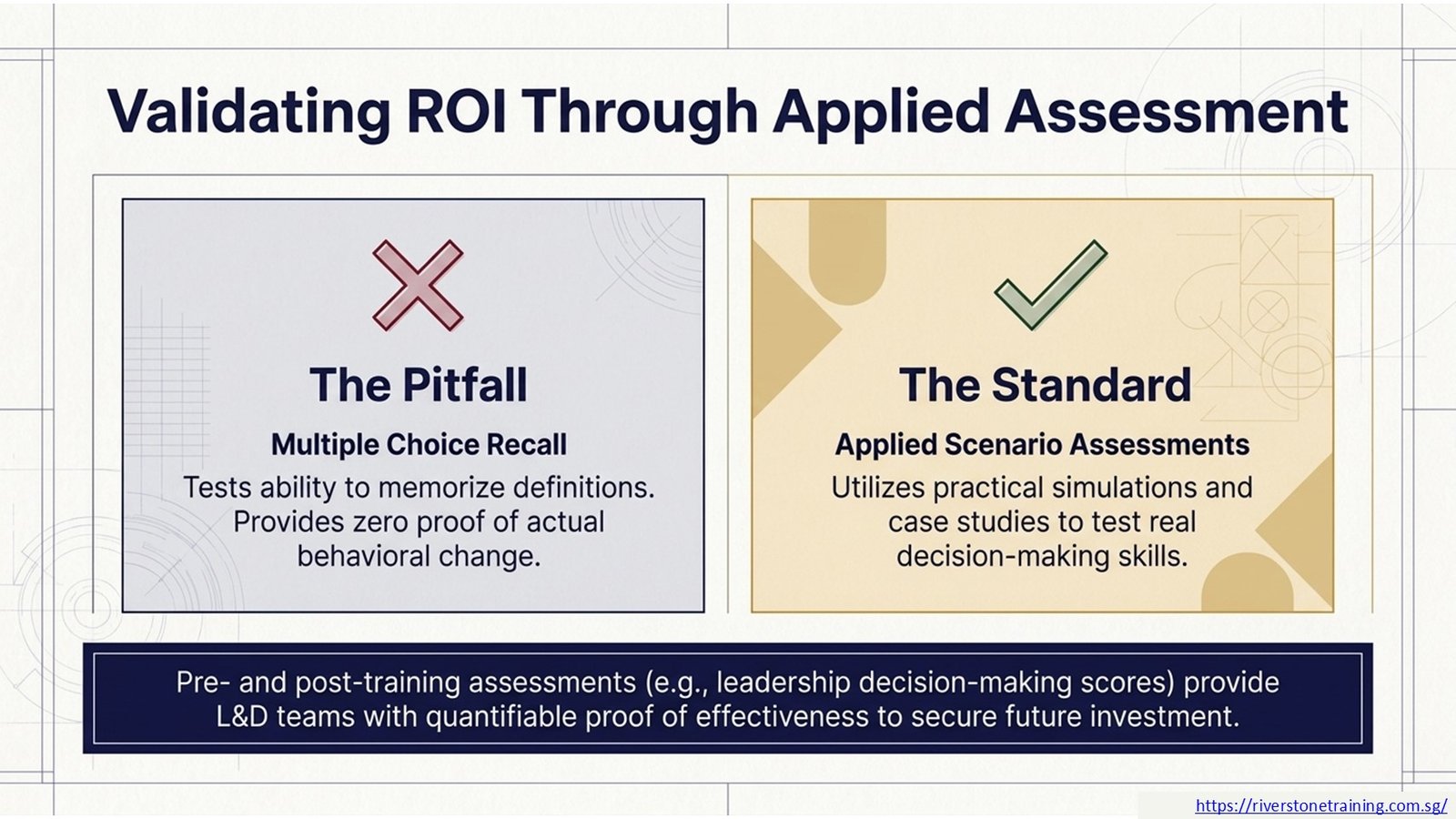
Assessments are used to determine the effectiveness of learning, assessing whether the learner can apply what they have learned from the course (not recall definitions). Real-world questions, such as scenario questions, practical simulations, and applied case studies, are likely to assess real skills more effectively than just multiple-choice recall questions. Well-designed assessments are aligned directly to the course learning objectives; therefore, the outcomes are directly aligned to specific skills.
Assessment also provides L&D teams with proof of training’s effectiveness, which they can present to management, such as higher course pass rates after a course has been revised. For instance, if the leadership development programme is based on an assessment, this could be done both before and after the programme concludes to show that there is measurable improvement in the skills of the participants in making decisions. This data will enable continuous improvement and more investment in content creation in e-learning.
What Common Mistakes Should Developers Avoid?
Content development shouldn’t take place until after analysis and design have been completed because often courses are found to require a great deal of modification once gaps in the plan are identified. Too much information in one module, not testing students on the course, and failing to ensure it is mobile-friendly are common errors that lessen the effectiveness of the course. Getting storyboards approved in a rush usually leads to more time spent on revisions later.
The other mistake is having content that focuses on the delivery of information instead of the desired performance outcome. If the course is designed to teach them about feedback theory, but not to allow them time to practice the skill, then it has failed to achieve its goal of changing the feedback behaviors of managers. Incorporating opportunities for stakeholder and learner feedback during development can identify these issues prior to launch.
| Challenge | Solution |
| Scope Changes | Strong project planning and change control |
| Low Learner Engagement | Interactive, scenario-based content |
| Inconsistent Quality | Structured review and QA process |
| Missed Deadlines | Effective e-learning project management |
How Can Organizations Maintain Consistent Content Quality?
Organisations ensure a consistent quality of content through an established template, style and review procedure for each course before it is released. A quality assurance checklist identifies accuracy, accessibility, functionality, and instructional alignment mistakes that may not be noticed by individual reviewers. This is very important when two or more teams or freelance developers contribute to the same course library.
Version control and content ownership also help to ensure the quality of content over time, as the course can have multiple versions, but the learner and administrator may get confused by an outdated version. For many L&D teams, they have a content owner to review specific courses on an irregular basis. This structured approach to e-learning content development keeps a growing course library reliable and easy to maintain.
How Does Collaboration Improve E-Learning Development?
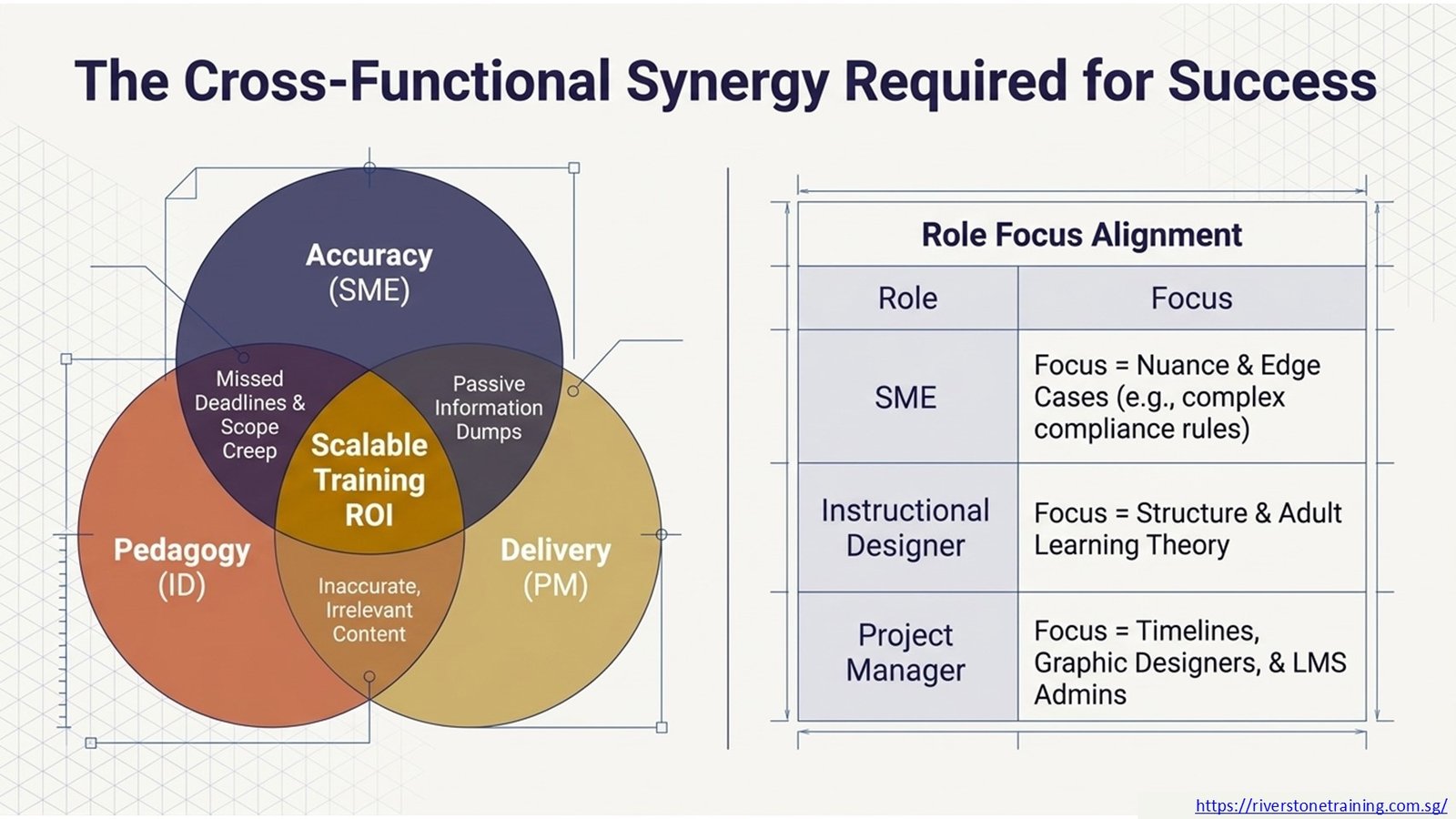
Collaboration is helpful in developing an e-learning course, as a subject matter expert can add accuracy, but an instructional designer can add structure and pedagogy; without either of the other two, a course is incomplete. It’s helpful for nuances, like edge cases in a compliance policy, to emerge from regular working sessions between SMEs and designers that can’t be captured in a document handoff. This partnership can also help to reduce the time needed for review cycles, as SMEs who participate early are more likely to provide timely and targeted feedback.
Project managers, graphic designers, and LMS administrators are also part of the cross-functional team and are key factors in the learner experience. Running a kickoff meeting and clarifying how each contributor is involved and when they need to finish their tasks helps avoid the miscommunication that can slow course launches. Structured feedback points during construction are more likely to produce uniform outcomes than if it is informal feedback.
Why Is Continuous Evaluation Important?
The need for continuous evaluation is paramount, as a course that works well when first developed might lose relevance or effectiveness due to changing job roles, systems, and/or policies. Post-launch findings indicate completion rates, assessment scores, and learner feedback to determine whether the course is achieving its objectives. If it is not continually reviewed, then the information may continue to circulate for a long time after it is no longer current.
Evaluation also highlights content that doesn’t perform well despite having been successfully designed on launch, for example, a module with a very low completion rate – this could be due to a technical problem or misunderstandings in the instructions. An annual review cycle for stable content, and more often for content that changes quickly, ensures a current course library. This assessment step ties together the process of creating e-learning content and the impact of training over time.
How Can E-Learning Content Stay Relevant Over Time?
So when organisations plan for maintenance of their e-learning content, it remains relevant over time, whereas a course with no maintenance plan is a single delivery item. Having content owners, conducting regular accuracy audits, and keeping an eye on industry or regulatory changes are all ways of catching the old material before it leads a learner astray. Maintenance is also much more efficient with modular course design, where individual sections of the course can be updated without having to rebuild the course.
Businesses that consider their course library to be a live project as opposed to a completed product are more likely to experience a positive long-term return from their training investment. For a financial compliance course, for instance, if there are changes to the regulations, the course would have to be rebuilt, but if it is built using easily editable modules, it is not a costly rebuild. This will maintain the content accuracy without embarking on a complete redevelopment cycle.
How Do Professional Development Skills Improve E-Learning Projects?
E-learning projects benefit from the professional development of instructional designers, developers, and project managers who are up to date with new tools and techniques, which results in better, more efficient e-learning. Continuous education on topics such as UX design, accessibility guidelines, and new authoring tools prevents the teams from using outdated production techniques. Organizations that invest in themselves gain faster and with fewer revision cycles in completing their projects.
An organization can also gain more control over timelines and costs by building internal capability, as the organization would not be as dependent on external vendors to complete each project. For example, if an L&D team has trained its own employees in creating storyboards and basic video production, it may be able to do a few of the smaller course updates internally, instead of all of them. This investment in team capability will enable long-term sustainable development of in-house e-learning content.
Conclusion
This article covers several key factors, and these are summarized in the table below and the role each one plays in successful e-learning outcomes.
| Success Factor | Contribution to E-Learning Outcomes |
| Instructional Design | Structures content around clear, measurable objectives |
| Project Management | Keeps timelines, budgets, and stakeholders aligned |
| Learner Engagement | Increases completion rates and knowledge retention |
| Technology Integration | Enables scalable, trackable content delivery |
| Continuous Evaluation | Keeps content accurate and effective over time |
These elements are interdependent and essential to a successful content development process for e-learning – instructional design to build the content around real objectives, engagement to keep the content relevant, quality assurance to catch errors before they are released to the public, and the right technology to deliver and monitor results. Together, subject-matter experts, designers and project managers are able to transform content into content that influences job behaviour.
E-learning content development provides the engaging learning experiences that organisations require, and e-learning project management is all about ensuring that those learning experiences meet a deadline, achieve quality standards and are aligned with organisational learning goals. Structured development processes, disciplined project management and ongoing assessment are helpful to organisations wishing to develop e-learning programmes that continue to work for the long-term beyond their initial launch.