E-learning’s interactive learning, realistic workplace scenarios, multimedia content, assessment, and learner-centered instructional design enhance the engagement of compliance training. Good compliance E-learning content helps to boost participation, learning retention and regulatory awareness by making reading through policy into a learning application.

What Is Compliance E-Learning Content?
Compliance e-learning content is a digital training program that enables staff to learn about regulatory or workplace requirements and workplace standards ethically through structured, interactive lessons. It is unlike the static policy documents, it incorporates instructional design, multimedia and assessment to facilitate the application of rules to real situations.
Topics generally include Internet privacy, workplace safety, anti-harassment policy, and industry regulation. The purpose is to teach employees the rules but to also develop judgment in their use of the rules in their work. The use of “generic” “one size fits all” content is also avoided – the content is reflective of the organisation’s real policies and risk areas.
Features of Engaging Compliance E-Learning
| Feature | Benefit |
| Interactive Activities | Higher learner engagement |
| Scenario-Based Learning | Better workplace application |
| Video Lessons | Improved knowledge retention |
| Quizzes | Reinforced understanding |
Why Is Employee Engagement Important in Compliance Training?
Compliance training is a critical area of employee engagement as the unengaged learner fails to remember what he or she read or watched – and that is a clear increase in business risk. If an employee clicks through a policy module without learning it, they are just as ready as someone who didn’t complete the module.
When the training is linked to a scenario that the learner can recall, engaged learners will have a better chance of recognizing compliance-related issues they are encountering in a real situation (e.g. a potential data breach or a conflict of interest). It’s because this connection between engagement and actual recognition has made learning outcomes a top priority for organizations these days, rather than just completion rates. Measuring engagement in addition to completion provides a much more accurate scope of how effective training is.
How Does Interactive Learning Improve Compliance Training?
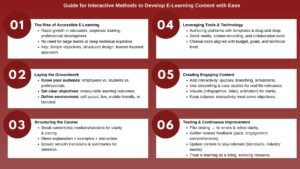
By making decisions, answering prompts, and observing the outcomes of their choices, interactive learning enhances compliance training by enabling learners to actively engage with the process. This engagement aids in creating a stronger memory and in developing an understanding of the rules’ purpose, not just the rules themselves.
Elements that are commonly used for interaction are branching scenarios, drag and drop exercises and decision point simulations which simulate real workplace decisions. Such formats ensure that learners are kept on their toes throughout an entire module without having to “skim” to the end where the decision is made, because at each step they must focus and not passively “click” their way through.
How Do Realistic Workplace Scenarios Improve Learning?
Realistic workplace scenarios enhance learning by embedding compliance rules in scenarios that learners will encounter in the workplace, such as when they process a customer data request or deal with a possible safety issue. This context provides a way for learners to apply what they are learning to their everyday decision-making.
Scenario-based learning also reveals grey areas, which are not captured in a policy statement, giving employees a way to think about what to do in ambiguous situations in the future rather than just regurgitating a rule. This can be especially useful for subjects such as ethics and anti-harassment training, where the circumstances can have a big impact on the correct answer, or subjects in which there might only be a single “right” answer, and that answer does not necessarily apply to all real-world situations.
Why Is Video-Based Learning Effective for Compliance Training?
Compliance training is effective with video-based learning as it makes learning more visual and auditory, making it easier to understand and recall than just text. A brief scenario video can convey better than a paragraph which describes the same scenario.
Video can also help organizations demonstrate tone, body language and working dynamics which would be hard to capture in writing, like how to appropriately voice a concern to a manager. Video content can be an active learning tool when combined with reflection questions.
Learning Methods Comparison
| Method | Best Use |
| Video Learning | Explain compliance concepts |
| Interactive Modules | Practice workplace decisions |
| Microlearning | Reinforce key regulations |
| Case Studies | Apply compliance knowledge |
How Do Quizzes and Assessments Reinforce Compliance Knowledge?
The course includes quizzes and assessments that help reinforce knowledge of compliance by getting the learner to recall and apply information soon after learning it, thereby strengthening long-term memory. A good set of questions will assess judgement in the context of the facts presented rather than just the recall of facts, e.g. learners to select the appropriate response in a workplace situation.
Assessments also provide a method for confirming understanding, rather than completion. A quick correction on wrong answers is more useful to learners to correct their misconceptions, than just a pass or fail at the end of the module.
How Can Gamification Increase Learner Motivation?
With gamification, this goal is accomplished through the use of points, progress bars, achievement badges, etc., which make the employees feel good about themselves as they complete training. When the feedback loops are small, it feels like more of a reward to make otherwise mundane compliance content more rewarding.
Gamification, when used correctly, also fosters positive completion actions like completing modules before deadlines or going back and reviewing questions missed in order to get a higher score. It should enhance the learning objective but not detract from it, since a non-essential game often does little to help any actual compliance understanding.
How Does Microlearning Improve Compliance Knowledge Retention?
Microlearning is effective for retention of compliance knowledge because it is broken into a series of short and focused lessons that focus on one concept versus a large amount of content. This is the same way real employees read, reading between the lines of other tasks.
The brevity of microlearning content also allows organizations to use these modules periodically for refreshers throughout the year, as the need to key in important rules and regulations. Spaced repetition is one of the most powerful methods for sustaining long-term awareness of compliance; knowledge simply fades over time if it is not reinforced periodically.
How Can Corporate Training E-Learning Content Support Different Learning Styles?
Corporate training e-learning content supports different learning styles by combining video, text, interactive exercises, and audio narration within the same course, allowing learners to engage with material in the format that works best for them. This flexibility improves comprehension across a diverse workforce.
In addition to compliance, a similar content strategy can be used for leadership, onboarding and skills training for the workplace. The principles of instructional design that make compliance training effective can also be used in these other training programs for leadership, onboarding, and workplace skills.
How Do Organizations Measure Compliance Training Effectiveness?
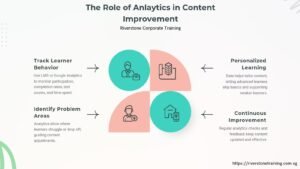
Organizations use learning analytics to gauge effectiveness of compliance training, such as course completion, assessment scores, time taken per course module, and trends of incidents after training. These metrics provide insights into the retention of not only completion of training but its impact on behavior.
More sophisticated organisations also monitor through time learners’ answers to questions involving scenarios and use this to ascertain whether their understanding is developing or whether certain scenarios require redesign to increase their clarity.
What Common Mistakes Reduce Learner Engagement?
The following are common pitfalls to avoid to maximize learner engagement: too much text, generic, stock content that is not relevant to the learner’s job, and no interactivity that makes training just a click through. These methods often do a good job of checking off boxes in a checklist but don’t actually foster understanding.
An equally common error is to apply a single module to all employees, irrespective of their role and/or risk exposure. In general, training that is not job-specific is less “rewarding” and generally leads to less attention and retention.
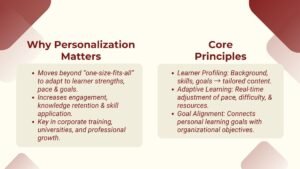
How Does Personalized Learning Improve Compliance Training Outcomes?
By tailoring the content, examples, and difficulty of the training to each learner’s role, department, or prior performance, personalized learning enhances the outcomes of compliance training. In compliance, a finance employee is at risk of different compliance issues than the warehouse employee, and different content is needed to address this difference, not one generic module for both.
Personalization can also be aimed at those who have difficulties with a specific topic: customizing practice or providing simplified explanations without going through the same fixed way for everyone. This adaptive approach to learning optimises training time for faster learners and also provides additional reinforcement for slower learners.
Employee Engagement Strategies
| Strategy | Learning Outcome |
| Gamification | Increased participation |
| Personalized Learning | Better learner experience |
| Progress Tracking | Higher completion rates |
| Immediate Feedback | Faster knowledge improvement |
What Skills Do Instructional Designers Use to Develop Compliance Content?
Adult learning theory, scenario writing, multimedia development, and assessment design are skills that instructional designers employ in creating compliance content that is accurate and engaging. They clarify complex regulatory text into usable, law-abiding lessons while maintaining legal accuracy.
Structured development processes are also employed by the designers, with close collaboration with compliance/legal teams ensuring that content is valid and available to a non-expert workforce.
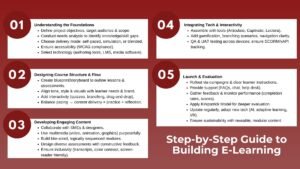
Compliance Training Development Process
| Stage | Purpose |
| Analysis | Identify learning needs |
| Design | Define objectives |
| Development | Create engaging content |
| Evaluation | Measure learning effectiveness |
Why Should Organizations Modernize Compliance Training?
Compliance training needs to be modernized to better align with the expectations of a workforce that has grown accustomed to an interactive digital experience. The modern e-learning formats increase completion rates and most importantly understanding of the regulatory requirements.
Modernized training is also more flexible with changing regulations as digital content can be readily updated and redeployed as compared with in-person training which would entail a complete re-scheduling of lessons. The agility is most critical in rapidly evolving regulatory domains such as data privacy and financial compliance.
How Can High-Quality E-Learning Content Strengthen Corporate Compliance Culture?
Quality e-learning programs enhance corporate compliance culture by reinforcing that the need to be aware of the rules is an integral part of the corporate routine, not just a yearly requirement. The training signals are engaging and designed in such a way that the organisation places emphasis on compliance and employee learning.
This regular reinforcement fosters a culture of proactive rather than reactive compliance, rather than treating it as an annual training problem. Organizations that make an investment in this type of continuous reinforcement will have reduced incidents of nonconformance and quicker issue reporting as a result.
Summary: Elements of Engaging Compliance Training
| Element | Why It Matters |
| Interactive Activities | Builds active participation and understanding |
| Scenario-Based Learning | Connects rules to real workplace decisions |
| Video and Multimedia | Improves comprehension and recall |
| Assessments | Verifies understanding, not just completion |
| Learning Analytics | Measures real behavioral impact over time |
Conclusion of Compliance E-Learning Content
Compliance training is made more engaging by e-learning content that integrates effective instructional design, interactive activities, realistic scenarios, multimedia learning and continual assessment. These components transition compliance training from a passive requirement to an active approach that enhances engagement, learning, and regulatory understanding. Compliance e-learning content can be used to provide regulatory training more effectively, and corporate training e-learning content to develop the workforce and provide engaging, scalable, measurable learning experiences. Compliant organizations establish a better culture around compliance and secure the long-term performance of their employee base.