Good e-learning training material will have a strong element of design, use interactive media, include real-life scenarios, be measurable and have a strong element of engagement to ensure knowledge retention and enhance employee performance. In the synergy of these components, corporate training becomes more than just observing; it becomes a real catalyst for skills and business outcomes.
What Is E-Learning Training Content?
E-learning training content is a set of pre-built digital learning content that provides workplace knowledge and skills through video, interactive learning, assessments and scenario exercises. It provides a different model to replace the traditional learning format of one-size-fits-all with formats that are more responsive to the way that adults learn on the job.
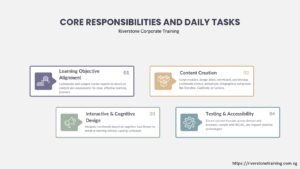
A good module should have an objective, a short explanation or demonstration, an interactive checkpoint and an exercise on application. For instance, a compliance module could be accompanied by a decision-based scenario, not with a long document on the policy. They may be short videos, simulations, branching scenarios, or anything else, depending on the skill you are trying to teach.
Why Is High-Quality E-Learning Important for Corporate Learning?
Very poor e-learning, unfortunately, results in poor completion rates, poor retention and poor behavior change on the job… which is why it is important to have high-quality e-learning. Organizations spend time and money training, expecting not only a certificate of completion, but an improvement in skills.
Quality content is based on a performance gap. A sales team that needs to improve their objection handling skills will get more out of a scenario-based module that focuses on real conversations than from a generic slide deck that’s full of sales theory in broad strokes. This specific approach has also reinforced the organisation’s understanding of training and will increase the likelihood of employees taking up further training.
How Does Instructional Design Improve Learning Effectiveness?
The main purpose of instructional design in boosting the effectiveness of learning is to organize content contents in a manner that helps to achieve the results of learning in a way that is logical, clear, and takes into consideration the characteristics of adult learning, instead of merely reproducing materials. It makes sure that each unit in a course has a specific learning goal.
Content that has clear applicability to the adult’s job and is delivered in a way that enables the adult to make use of the new information is more likely to be retained. A good module could present an idea, provide an on-the-job example of the idea, and then challenge students to put their knowledge and understanding to the test when they are presented with a problem in the workplace. This sequence follows the path of learning most effectively adopted by adults, which is to learn something relevant to them, practice it and get feedback, not to accept content dumped into their heads.
What Makes Learning Content Engaging?
Engaging learning content is learning content that uses various media and scenarios that are relevant to learning and provides opportunities for students to participate actively in learning without long reading or narration. The focus on engagement is not about fun; it’s about relevance to the learner’s role.
Branching scenarios, short quizzes, and decision points help to keep learners engaged throughout a module. For example, a customer service course could show a customer service scenario that includes an unhappy customer, and then show the participant how they will respond to that scenario and what the results are of their response. Views of the outcomes of a decision make the lesson memorable and cannot be gained from reading best practices.
How Does E-Learning Video Content Improve Knowledge Retention?
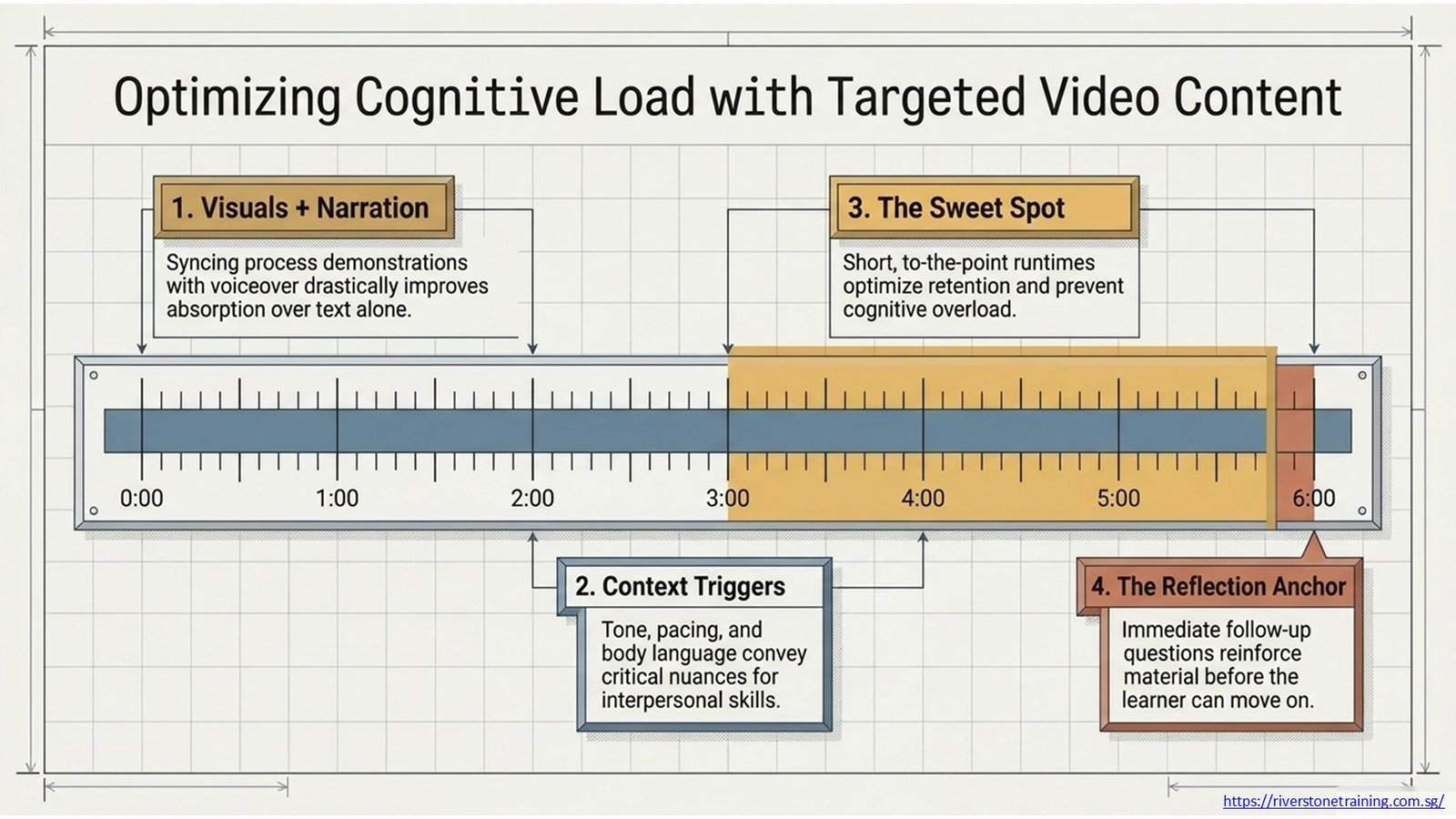
The combination of visuals and narration – as is common with e-learning video content – helps learners absorb and remember that information better than they would with just text. It’s often better to see a process that’s done right than to read about it.
E-learning video content is particularly effective when it comes to procedures, software workflows or interpersonal skills—where tone, pacing and body language can convey additional context that text cannot. Videos that are shorter and more to the point, typically 3-6 minutes, do better at sticking in the mind than longer videos. When learning is paired with a follow-up question or reflection prompt it further reinforces the material before moving to the next section, before the learners move on.
Why Are Real-World Workplace Scenarios Important?
Real-world workplace scenarios: They are important because they bring abstract concepts down to the real world of what employees have to do on a day-to-day basis. Theory-only training is much less likely to make a difference to the behaviour of the learner when they return to their work.
A learning workflow for a finance team is better off done in real-life scenarios of the invoice, not a summary of a policy. This type of applied practice helps to bridge the gap between understanding the rule and using it correctly in real game situations, and as you may recall, the key to making training investments count is to use the rule correctly during the game.
How Do Interactive Activities Increase Learner Engagement?
Interactive activities are activities that involve making choices, answering questions, or moving objects in the content. This is active involvement, ensuring concentration and practising the learning as it is acquired.
They are often in the form of drag-and-drop exercises, simulations to be clicked on, or branching decision trees. For instance, a novel manager training program could be a simulated one-on-one discussion with responses for the learner to choose from, and observe the subsequent conversation. These formats also provide instructional designers with valuable information about the decisions that students make, which can be used to make decisions regarding modifications to the course.
How Can Microlearning Improve Corporate Training?
Microlearning can enhance corporate training by transforming the content into short and focused pieces that can be completed within a few minutes, which employees can easily fit into their busy workday. This format allows for better focus than long courses that are all taught in one sitting and for easier recall.
It’s easier to remember and implement a 5-minute module on one particular skill than a one-hour communication course on many skills. Microlearning is also ideal for a just-in-time reference, particularly for employees on the front line, who have short timeframes in which to learn, particularly when they need a quick refresh.
How Does Personalized Learning Improve Employee Development?
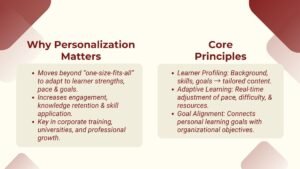
Personalized learning enhances employee learning by adjusting content, pacing, and/or pathway based on an individual’s role, skill level or past performance. It is unlikely that employees with different experience levels will receive the same training.
An adaptive learning platform could present a novice worker with the basics and take a more advanced worker to more complex content. By focusing on the learner, which respects their time, and the content is relevant to their real needs, frustration will be minimised, and completion rates will be higher across a variety of teams.
What Role Does Assessment Play in E-Learning?
Assessment is important as it helps to determine if learners have learned and can use the content, as opposed to just moving through slides. Assessment is the only way for an organization to be sure that learning has taken place when there is no assessment.
Good assessments connect to recall (multiple choice) but also incorporate scenario questions that are similar to real decisions. A compliance course may have a borderline scenario and require that the student make a judgement call on what to do, instead of just being able to memorize it. Well-designed assessments can also provide the ID with an early warning system if a concept has not been well taught.
How Can Organizations Measure Learning Effectiveness?
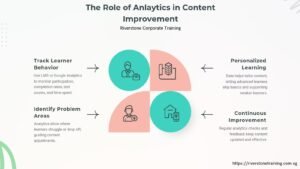
The effectiveness of learning is measured by completion rates of learning, assessment scores, learner feedback, and changes in on-the-job performance, which is the most important measure of effectiveness. What information should be linked back to actual business results should be recorded on the learning platform.
Learning analytics can provide insights into where students are experiencing difficulties, which questions they are likely to be missing, and the amount of time it takes to complete a module. This data can then be used to update weak sections, instead of merely taking a stab at what needs to be improved, making each training cycle one that can be used to measure content improvements.
What Technologies Support Modern E-Learning Development?
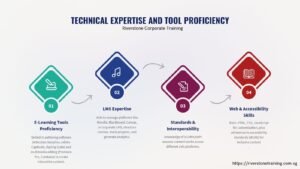
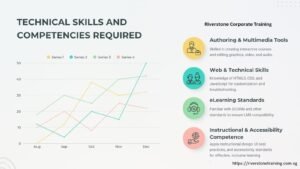
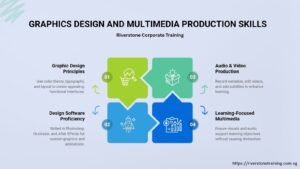
The development of modern e-learning is based on authoring applications, learning management systems, video production software and analytics software that are interconnected and used to develop and monitor training content. These tools enable teams to develop, publish, and make improvements to courses quickly.
A typical process could involve creating interactive modules in an authoring platform, distributing the modules through an LMS and monitoring their completion status, and examining learner performance reports in built-in reporting dashboards within the LMS at the department level. Simple animation software and video production tools also enable teams to create engaging content without the need for a professional video production studio.
How Does E-Learning Support Continuous Employee Development?
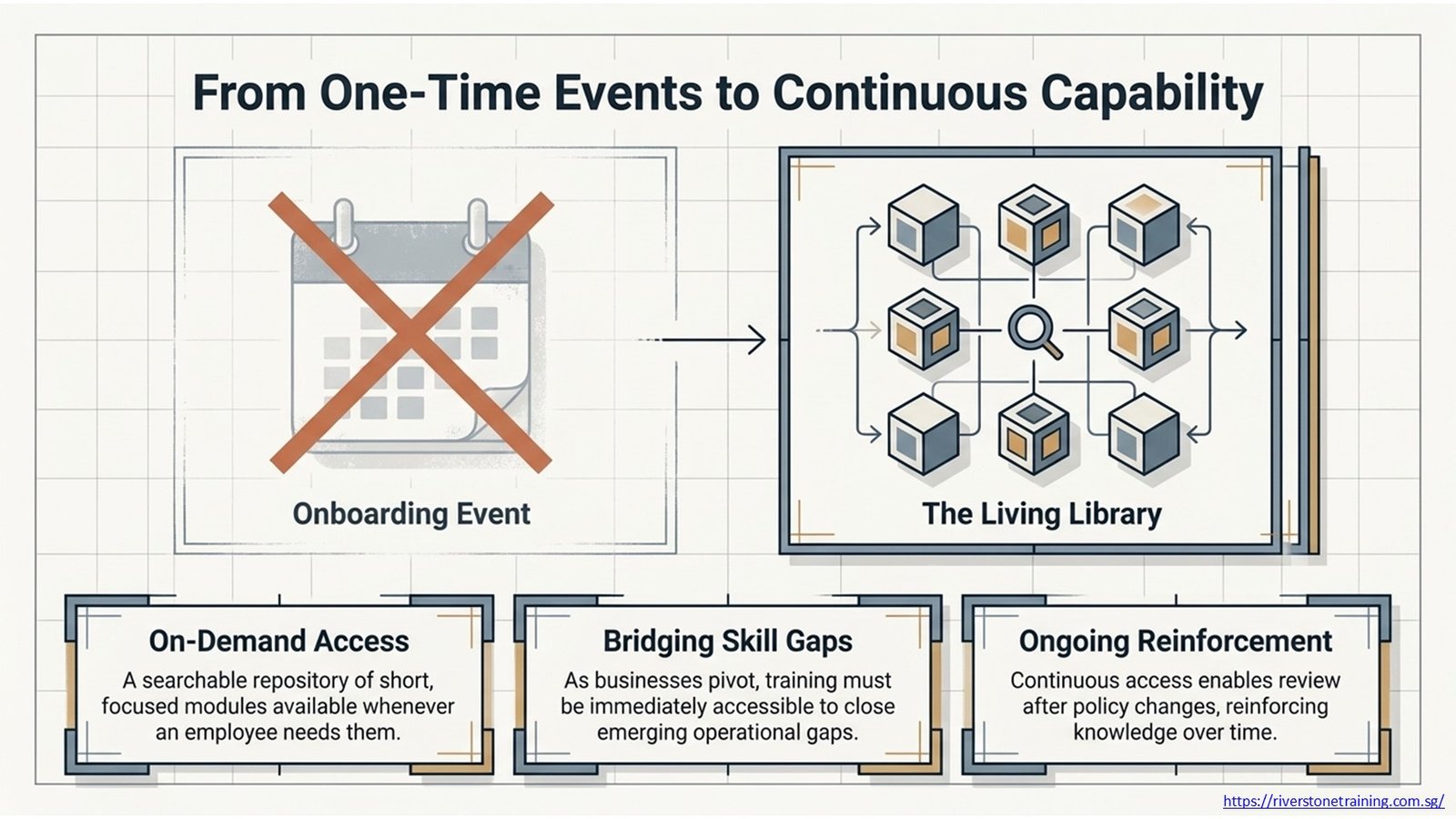
E-learning can be used to help with ongoing development as it enables employees to learn continuously as opposed to learning once in a while as part of the onboarding process. Skills change, and businesses need training – when there is a gap in skills, there should be training available.
A library of short, searchable modules provides employees with the option to review topics as needed, for example after a policy change, etc. It is continuous access that helps reinforce knowledge over time rather than through one-time training sessions.
What Common Mistakes Should Be Avoided When Developing E-Learning Content?
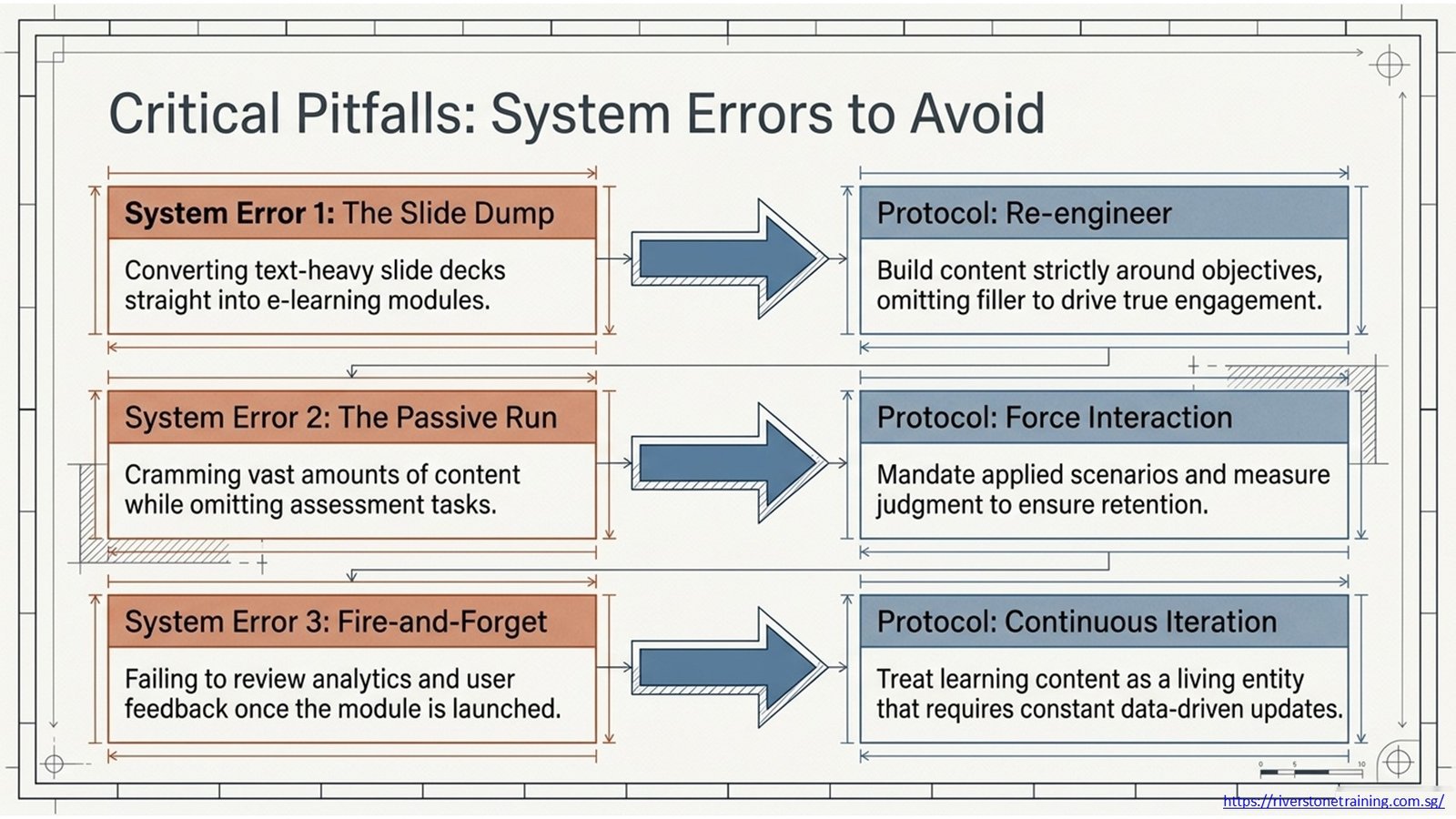
Typical pitfalls are taking existing slide decks, converting them to e-learning, putting lots of content in modules and omitting assessment and application tasks. This is not conducive to engagement and retention.
Another common mistake is failing to listen to the feedback and analytics once the app is launched. Content must be considered a living entity, to be continually improved as a result of the completion data and performance results, rather than a product to be handed over.
Why Should Organizations Invest in High-Quality E-Learning Content?
High-quality e-learning content is a worthwhile investment for organizations as it has an important impact on the capability of the workforce, consistency of knowledge within teams, and measurable business performance. When training sessions are not put together properly, they are a waste of both time and company resources.
Well-designed e-learning training content pays off through faster onboarding, stronger skill transfer, and training programs that scale consistently across departments and locations.
Characteristics of Effective E-Learning Content
The table below outlines the key characteristics that set effective corporate e-learning content apart from general digital training.
| Feature | Benefit |
| Clear Learning Objectives | Better learner focus |
| Interactive Activities | Higher engagement |
| Video-Based Learning | Improved knowledge retention |
| Practical Scenarios | Better workplace application |
| Ongoing Assessment | Verified skill development |
Learning Methods Comparison
There are various types of learning that are used in different ways for different purposes in a corporate training program, as detailed below.
| Method | Best Use |
| Video Learning | Concept explanation |
| Microlearning | Quick skill development |
| Scenario-Based Learning | Decision-making practice |
| Interactive Quizzes | Knowledge reinforcement |
| Personalized Pathways | Role-specific skill building |
Corporate Learning Benefits
Investing in structured e-learning content produces measurable benefits at the organizational level.
| Benefit | Organizational Impact |
| Higher Engagement | Better completion rates |
| Improved Skill Transfer | Increased productivity |
| Consistent Training | Standardized knowledge |
| Continuous Learning | Long-term capability development |
Instructional Design Process
Instructional design typically follows a structured process to ensure content aligns with real learning needs.
| Stage | Purpose |
| Analysis | Identify learner needs |
| Design | Plan learning objectives |
| Development | Create learning materials |
| Evaluation | Measure effectiveness |
Summary: What Makes E-Learning Content Effective
The table below brings together the key elements covered in this article.
| Element | Role in Effectiveness |
| Instructional Design | Structures content around clear objectives |
| Video Content | Improves engagement and retention |
| Interactivity | Keeps learners actively involved |
| Workplace Scenarios | Connects learning to real decisions |
| Measurable Outcomes | Confirms training impact |
Conclusion: Building E-Learning That Delivers Results
Good e-learning training content is created through proper instructional design, authentic involvement with the learner, practice and intervention, and measurable results—not just re-digitized versions of a traditional training program. From scenario-based learning to assessment and analytics, each element discussed in this article has a specific role to play in the process of helping employees retain and apply new skills.
With high-quality e-learning training content, companies can develop a more effective, unified workforce, and with e-learning video content, they can boost employee engagement, retention and the ability to apply their knowledge outside the classroom. Companies with a commitment to investing in their digital learning design are setting the stage for greater performance and ongoing employee growth over the long haul.