Leadership e-learning content builds effective leadership competencies through a structured course, interactive exercises, scenarios, and evaluations, tailored to an individual’s learning journey. This is being developed to give practical communication, decision-making, and people management skills using custom e-learning content created to suit an individual’s role and experience level.
What Is Leadership E-Learning Content?
Leadership e-learning content is content that is delivered in a digital format, comprising structured learning, interactive exercises, and real-life scenarios to develop management and leadership abilities. It generally includes video, text, simulations, and assessment, and follows a guided learning sequence to build specific competencies and not general theory; learners will leave with skills they can use the same week.
As opposed to a single workshop, leadership e-learning content is created to be revisited at a later period, which provides opportunities to refresh skills like communication, decision-making, and coaching over time. This structure is suitable for emerging leaders and for experienced managers, as content can be arranged by role, responsibility, and prior experience.
Why Is E-Learning Effective for Leadership Development?
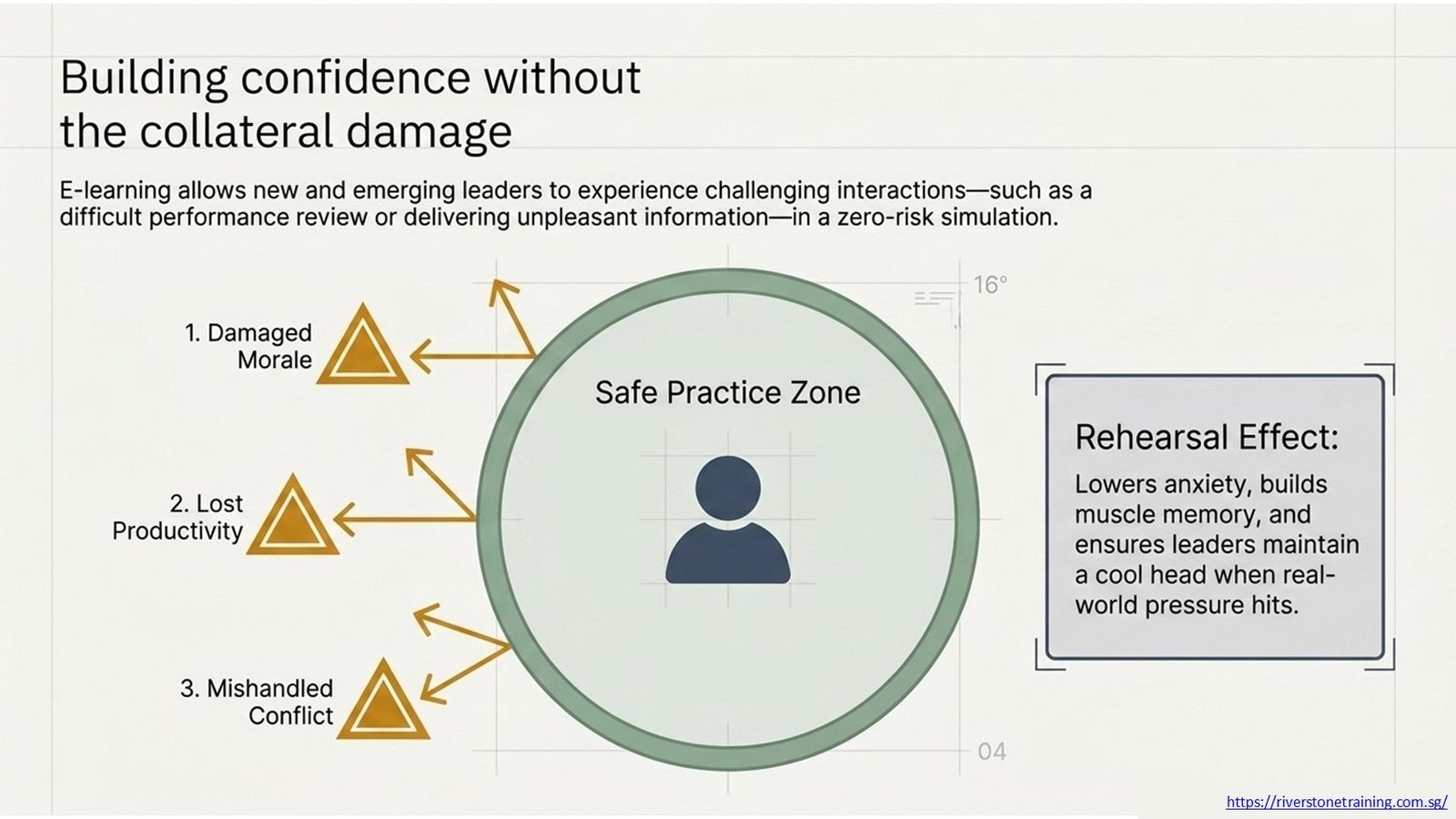
E-learning is being used for leadership development because it allows the learner to practice the skills in realistic situations without the risk of the consequences that might occur in the workplace. A new supervisor can ‘practice’ a challenging performance discussion in a simulation before conducting the actual discussion with a team member, which can help to lower anxiety and increase the chances of a positive result.
It also enables leadership training to be delivered around business schedules as modules can be delivered in a shorter period of time, as opposed to a whole day out of the office. This allows for higher completion rates and ensures a consistent learning experience when working on geographically dispersed teams or teams with shifts.
How Does E-Learning Improve Communication Skills?
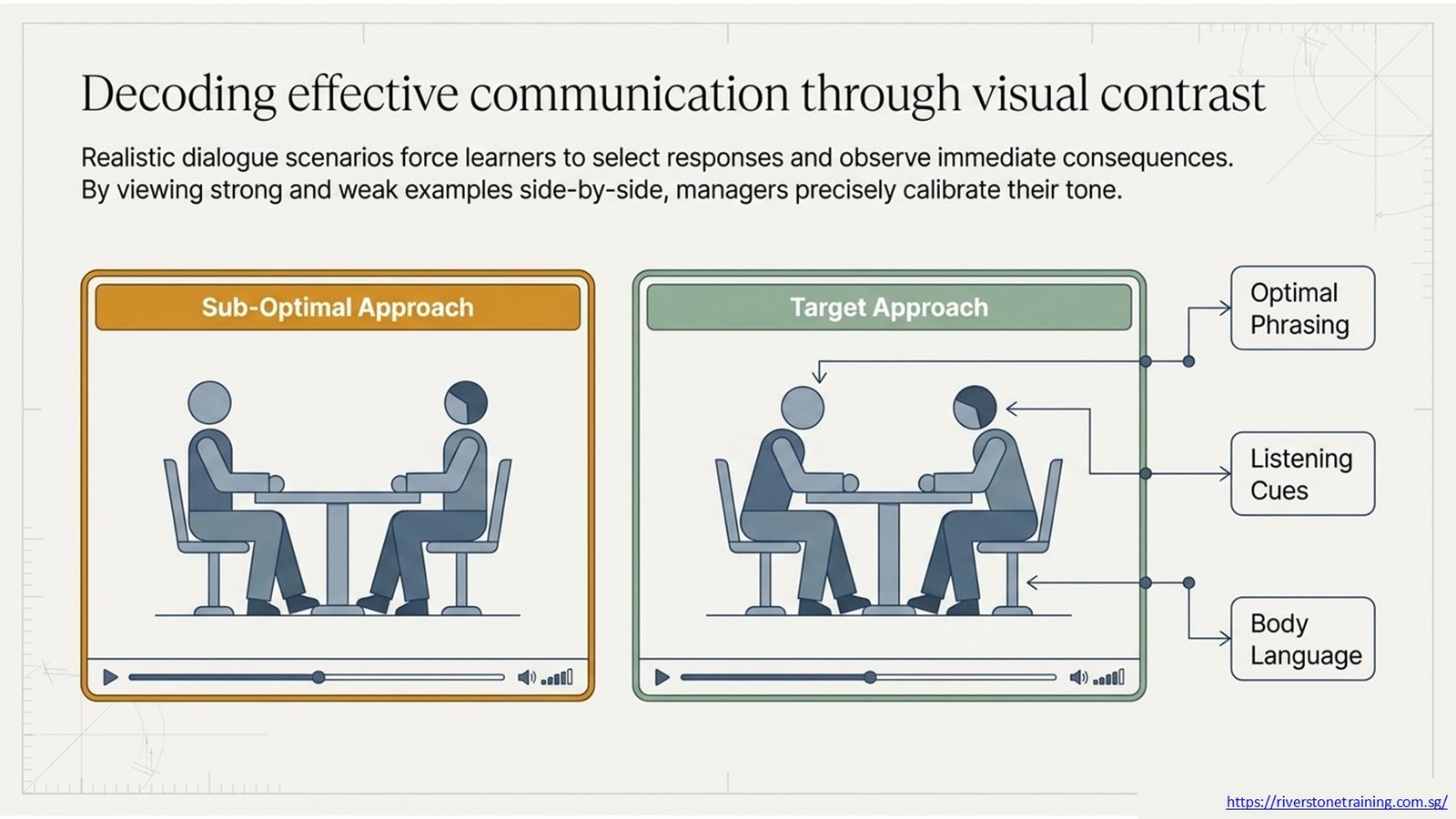
The use of e-learning enhances communication skills by presenting realistic dialogue scenarios in which learners select a response and observe the consequences of their choice. It is a way for leaders to practice clear instructions, feedback, and adjust tone prior to using it in actual dialogues with their teams.
Video-based modules also allow learners to see strong and weak communication examples side by side, helping them to see more clearly what good communication looks like – the optimal use of phrases, listening cues and body language – in a management context, and apply these skills to their own meetings.
How Can Digital Learning Strengthen Decision-Making Abilities?
Decision-making is reinforced with digital learning by presenting a series of scenarios that branch off for learners to choose their business outcome. A department head may go through a budget reduction exercise and make an analysis about which team is worth cutting out and the impact it will have on morale, productivity, and retention.
These drills foster pattern recognition, so that leaders can make trade-offs more quickly in actual situations. The feedback that is provided immediately following each decision point also reinforces good thinking and identifies what they were missing months after the fact, at a formal performance review.
How Does Scenario-Based Learning Develop Leadership Confidence?
Through scenario-based learning, learners get to practice their leadership skills in a safe environment where they can experience situations that require them to deal with conflict amongst team members or deliver unpleasant information. Exposing them repeatedly to those situations decreases hesitation in the face of similar scenarios at work, and aids in maintaining a cool head when the pressure is on.
Learners have the opportunity to try different scenarios and see what works, so they have a greater understanding of what works before having any real stakes in the game. One of the most beneficial things that can come from this rehearsal effect is when scenario-based leadership training is used for first-time managers.
How Can E-Learning Improve Team Management Skills?
E-learning helps to enhance the management of teams, showing the learners specific situations, like how to delegate, handle scheduling conflicts, etc., and how to deal with underperformance. Checklists and templates are commonly provided in the interactive modules so that managers can use them the same day they finish a lesson with their own team.
Courses also include the identification of the various working styles in a team and how to adjust management style to each person’s working style to enhance production and morale.
Why Is Feedback Important in Leadership Development?
Feedback is a crucial element in leadership development because it reveals to the learner where he or she is solid and where he or she needs to improve. Providing immediate feedback on the correctness of reasoning for a quiz question or choice of a scenario helps to strengthen the correct reasoning immediately, while explanations for the incorrect choices help to ensure that the same mistake will not occur in the workplace.
Structured feedback loops also highlight the kind of feedback leaders should provide their own teams, showing how specific, timely, and helpful comments help to encourage development and growth, rather than discourage, reinforcing good coaching skills as well as the course content.
How Does Personalized Learning Improve Leadership Training Outcomes?
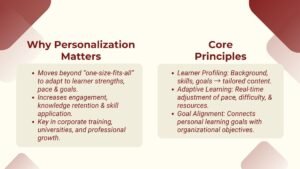
Personalized learning is more effective in leadership training by tailoring the learning content to the role, experience, and existing skill gaps of a learner as opposed to providing the same content to all. A difference in depth is required between the first-time supervisor and the department head and is apparent in the topics of delegation or strategic planning, for example, and personalization is the reflection of that difference.
Personalization also allows learners to move on from topics they cannot help but have already learned and allocate more time to weaker areas, thereby maintaining engagement to maximize training time in a packed work schedule.
How Can Custom E-Learning Content Address Different Leadership Levels?
Custom e-learning content tackles multiple levels of leadership through the development of distinct leadership paths for emerging leaders, team leaders, supervisors, managers, and department heads. The paths are designed to show the real-life choices and accountability of the role, not generic leadership tips that are not applicable to any specific role.
Custom content can also be customized with the organization’s own scenarios, terminology, and case studies, helping to make training seem more relevant to the business and less abstract from another industry or company culture.
How Do Interactive Assessments Reinforce Leadership Skills?
Interactive assessments encourage students’ use of concepts instead of their recall. For example, an assessment might involve a scenario that requires a learner to determine the most effective approach to take in the event that an employee is not performing well and ask the learner to explain their decision-making and reasoning, versus providing a definition.
These assessments are also given in multiple parts of the course, rather than just saved for a final test, which allows learners to learn throughout and provides trainers with clear data on which competencies may require additional support before they can advance to the next course module.
How Can Organizations Measure Leadership Training Effectiveness?
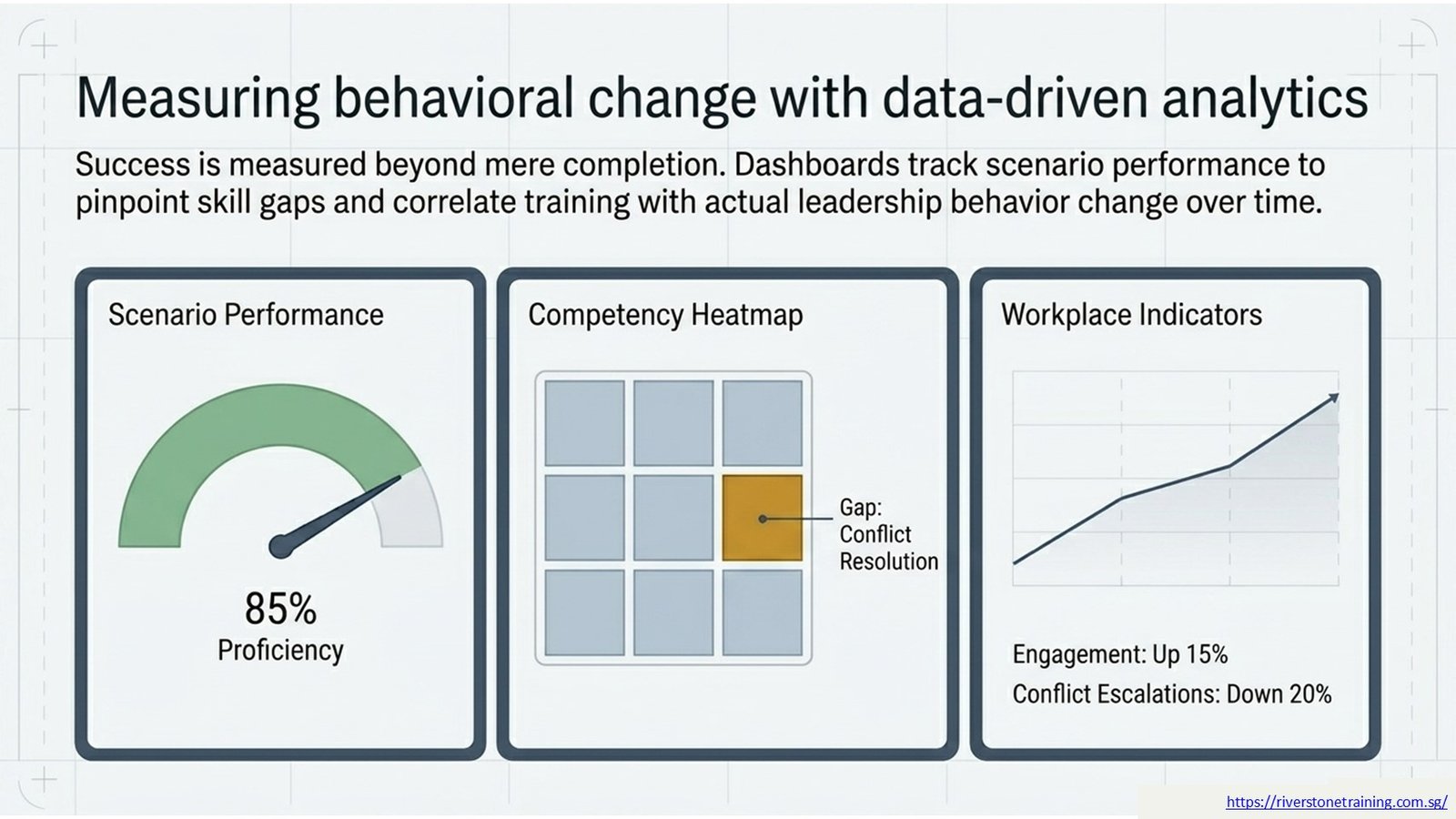
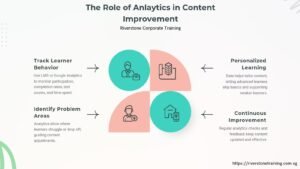
The effectiveness of leadership training can be assessed by completing leadership training, assessment scores, and scenario performance using learning analytics dashboards. This data indicates not only those who completed a course but also which leadership competencies participants found most challenging, enabling trainers to channel their next steps in coaching that will have the greatest impact.
Workplace indicators can also provide an accurate measure of effectiveness, including an increase in team engagement scores or a decrease in escalation of conflict over time, and relate training completion to actual leadership behaviour change over time.
What Technologies Support Modern Leadership E-Learning?
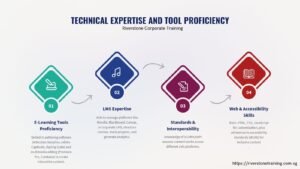
Learning Management Systems, branching scenario tools, video authoring systems, and an analytics dashboard that monitors learner progress are all used to support modern leadership e-learning. The technologies enable instructional designers to create courses that are interactive and trackable, instead of a collection of static slides that provide little indication of actual course learning.
Mobile-responsive platforms and short learning formats also enable modern leadership development, so that busy managers can take part in the training without having to set aside large blocks of time from their teams.
What Skills Do Learners Develop Through Leadership E-Learning?
Leadership e-learning helps learners acquire communication, decision-making, coaching, conflict resolution, and emotional intelligence skills. Good courses link each skill to a specific task in the workplace, such as conducting a one-on-one meeting or settling a scheduling disagreement between people in the same team.
Learners also develop strategic thinking skills by engaging in scenarios of greater length and complexity, which involve making decisions about competing priorities – e.g. budget constraints versus team development – the same as in a real management situation.
How Does Leadership Development Benefit Organizations?
Organizations can improve leadership development benefits by having employees stay longer as part of the reason is having managers who can communicate and support their employees’ growth. Good leadership also leads to more consistent and rapid decision-making, thereby cutting down on delays and rework between teams.
Organizations that invest in leadership development, including a structured leadership e-learning content programme, also build a stronger pipeline of internal candidates ready for promotion, reducing reliance on external hiring for senior roles.
Why Should Organizations Invest in Custom Leadership E-Learning?
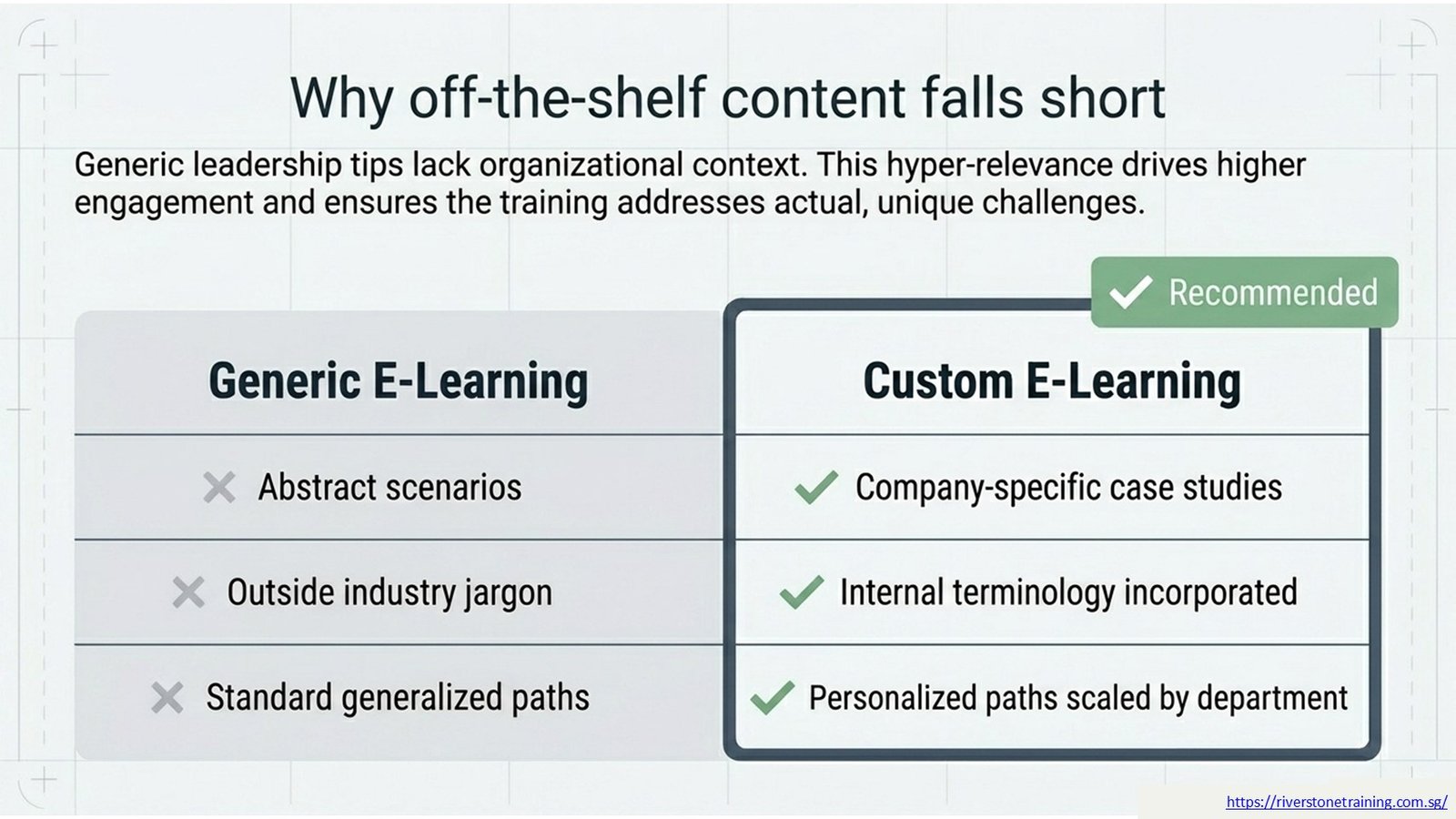
As generic leadership content may not necessarily capture the specific terms, issues, and dynamics of an organization’s business, investments in leadership e-learning that is custom to their organization are advised. Learners receive training that is real to them and immediately applicable to their role through the use of custom content based on real situations.
Providers offering custom e-learning content can build personalized learning paths, company-specific scenarios, and progress tracking that scale across departments while remaining relevant to each learner’s leadership level.
Leadership Competencies Developed Through E-Learning
The table below is a summary of the key leadership skills e-learning courses create and the ways these skills are utilized in the workplace.
| Leadership Skill | Workplace Application |
| Communication | Team collaboration and clear instructions |
| Decision-Making | Faster, more consistent problem-solving |
| Coaching | Employee development and growth |
| Emotional Intelligence | Stronger relationship management |
| Strategic Thinking | Balancing competing business priorities |
E-Learning Methods for Leadership Development
Various digital learning approaches can be used to enhance various parts of leadership development.
| Learning Method | Leadership Benefit |
| Scenario-Based Learning | Better real-world decision-making |
| Interactive Quizzes | Reinforces knowledge retention |
| Video Lessons | Demonstrates practical skill application |
| Microlearning | Supports continuous, flexible development |
| Branching Simulations | Builds confidence through safe practice |
Leadership Skills and Business Impact
E-learning is effective in developing leadership skills that impact organizational outcomes.
| Skill | Business Impact |
| Team Management | Higher productivity across teams |
| Conflict Resolution | Stronger, more cohesive teamwork |
| Coaching | Improved employee growth and retention |
| Strategic Thinking | Better long-term business decisions |
| Feedback Delivery | Faster performance improvement |
Benefits of Custom E-Learning Content
The value of custom content for leadership can’t be matched with general content and leadership training.
| Feature | Benefit |
| Personalized Learning Paths | Relevant skill development by role |
| Company-Specific Scenarios | Greater workplace relevance |
| Interactive Activities | Higher learner engagement |
| Progress Tracking | Continuous improvement and accountability |
| Scalable Delivery | Consistent training across departments |
Conclusion: Building Stronger Leaders Through Digital Learning
E-learning content fosters robust leadership capabilities through a blend of structured learning, scenario-based practice, interactive evaluations, and customized learning trajectories. They combine to develop valuable communication, decision-making, and people management capabilities that the leader can use immediately in the workplace.
Organizations looking to strengthen current and future leaders should consider well-designed leadership e-learning content, while those seeking maximum relevance and engagement should invest in custom e-learning content tailored to their teams and business needs.