Effectiveness of e-learning training is enhanced when the organization provides structured digital materials, access to learning materials anytime, anywhere, engaging learning activities, lesson assessment, tracking of learning progress, and learning analytics as part of one purposeful learning experience.
Digital training is not about simply uploading existing slides or handouts online; it’s about creating content that is designed to meet the way people learn digitally.
Here, we discuss the importance of measurable training results and how HR, L&D, and training teams can create e-learning that achieves measurable outcomes.
What Makes E-Learning Effective for Training?
Effectiveness of e-learning training is not necessarily based on the fact that a course has been published online, but on the extent to which the digital learning experience is conducive to the desired learning goals. The quality of the content, instructional design, engagement and interactivity of the content, accessibility of the content, and the relevance of the content to the job are all factors in the retention and application of the content. A course may be well-designed, and yet if it is not explicitly designed to achieve a desired behavior change, it will not do so.
Cheap and easy to convert a class presentation to a PDF or video doesn’t make it effective training. E-learning is planned to be delivered digitally and ideally includes assessment, feedback, tracking progress, and analytics to give organisations a picture of whether learning goals are being achieved. If these are all combined, the effectiveness of e-learning training can be measured instead of assumed.
Table 1: E-Learning Effectiveness Factors
| Factor | How It Supports Learning |
| Structured Content | Creates a logical learning path |
| Interactivity | Encourages active participation |
| Assessments | Measures knowledge |
| Feedback | Helps correct misunderstandings |
| Analytics | Identifies learning patterns |
| Flexibility | Supports different schedules |
How Does Structured Digital Content Improve Learning?
Structured digital content facilitates training by providing a logical sequence of learning objectives, modules, lessons and short learning units for employees instead of a single long document. In small chunks, supported by multimedia, interactive activities and knowledge checks, the learners can see how each chunk relates to the training goal. This approach minimizes cognitive load and facilitates employee learning and its relevance to their context.
For instance, a compliance course may include sections such as regulatory principles, typical hazards, scenarios from the workplace, tests, and an end-of-course evaluation. Each stage follows the others and consolidates the learning prior to progressing on to more sophisticated material. Such course sequencing is intrinsic to a course-based approach and not an outcome of a course-based approach.
How Does a Learning Content Management System Support Training?
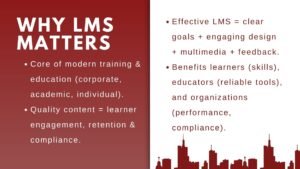
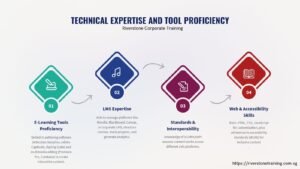
A learning content management system has a key role in organizing, delivering and monitoring digital learning materials at scale. It helps training teams to design courses and modules, manage content, support various learning modalities, and centralize resources for all employees in all departments and locations to receive the same training. This makes it easier for training managers to manage the administration of course versions and files that can be spread out.
A learning content management system can also facilitate assessment management, monitor usage by learners, and help report to larger measurement programs. Organizations exploring how to structure this kind of platform can review this learning content management system guide, though platform capabilities vary considerably, and organizations should choose technology based on their specific learning requirements rather than assuming one system fits every use case.
How Does Flexible Access Improve Training Effectiveness?
Flexibility of access, such as self-paced learning, mobile learning, and remote learning, may help employees to fit training into their busy work lives. Employees can receive training across various locations and/or time zones when they are not on-site during business hours, resulting in fewer scheduling conflicts and less wasted time from team members having to leave their jobs to attend in-person training sessions.
But flexible learning does not necessarily result in improved learning outcomes. Clear deadlines, where appropriate, structured course design, learner support, reminders, engaging approaches, and manager support are still required for organisations to ensure flexible access equates to completed and effective training and not indefinitely postponed training.
How Can Interactive E-Learning Increase Learner Engagement?
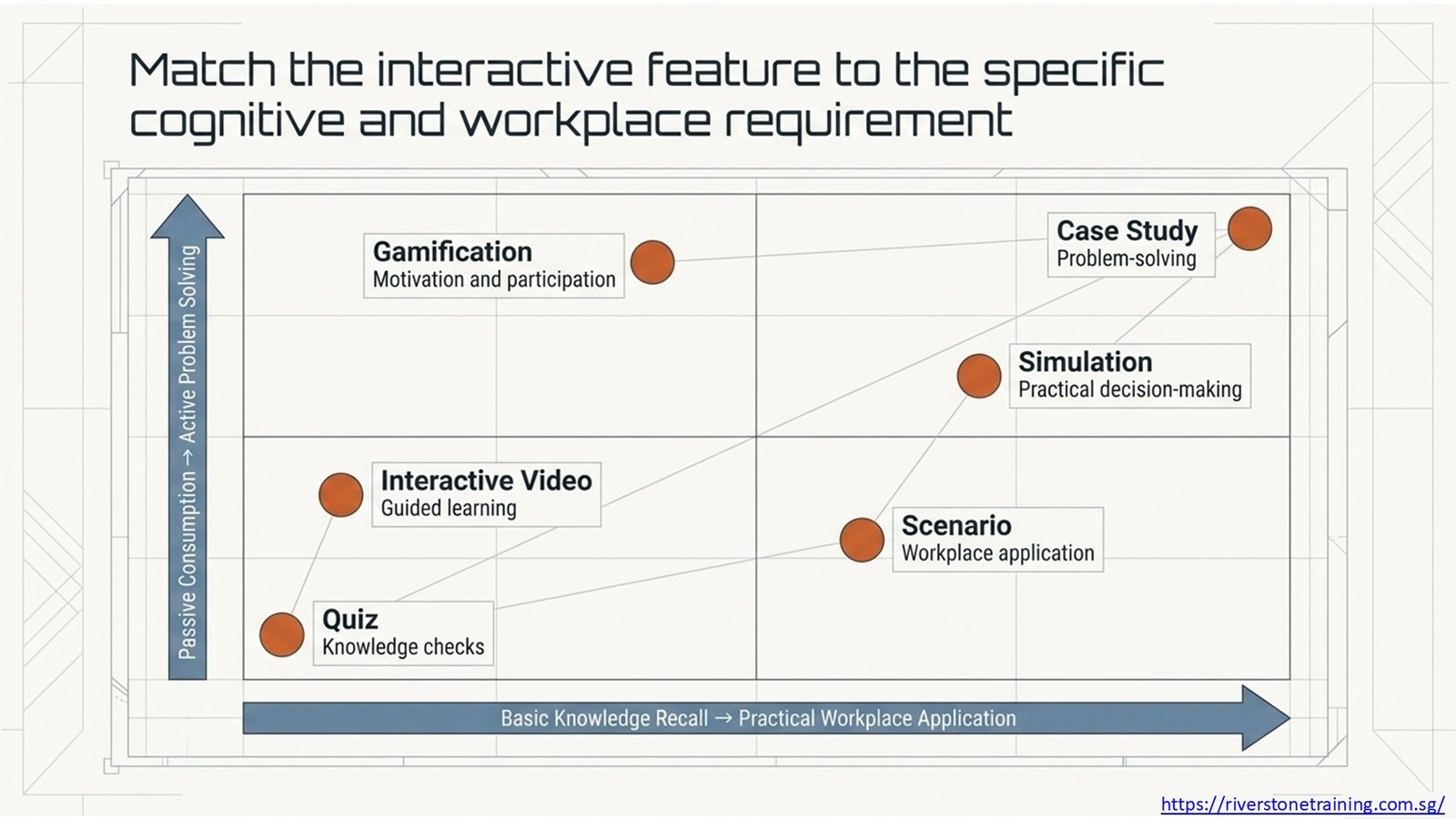
The ability to use interactive elements like quizzes, simulations, branching scenarios, drag-and-drop activities, interactive videos, case studies, and gamification can foster engagement by prompting learners to be active rather than passive. For example, a financial compliance course could show a scenario of a problem that could be considered regulatory, and have students choose the appropriate response rather than simply memorise it.
Engagement features should be used for their learning purpose, not for novelty. Interactivity is not always effective, however, and should be closely linked to a learning objective and should provide the learner with a ‘need to think’ about their workplace situation.
Table 2: Interactive Learning Features
| Feature | Training Application |
| Quiz | Knowledge checks |
| Simulation | Practical decision-making |
| Scenario | Workplace application |
| Interactive Video | Guided learning |
| Gamification | Motivation and participation |
| Case Study | Problem-solving |
How Do Assessments Reinforce Knowledge?
Assessments such as pre-training assessments, knowledge checks, quizzes, scenario-based assessments, practical exercises, and final assessments enable organizations to decide if the learner has really achieved understanding of the content or merely finished the course. This is important because a course is not the same as knowledge; it may seem like knowledge in your head, but in fact, there is a gap in what you know.
Feedback is an integral component of this process: learners receive feedback on what they do not understand, so that they can correct this misunderstanding while it is fresh. A good assessment is aligned with the learning goal with which it was designed, such as regulatory knowledge, practical skills, or the ability to apply a concept to a workplace situation.
How Does Progress Tracking Help Training Managers?
Tracking provides training managers with visibility on course completion, module completion, assessment scores, time spent learning, repeat and failed attempts. This allows managers to spot any employee who needs extra support, whether this be more coaching, a follow-up conversation, or additional learning materials focused on a specific gap.
But just because students are completing the course doesn’t mean training is effective. Progress data is most useful when seen in conjunction with the assessment performance and other evidence of real learning, and not in isolation from success.
How Can Learning Analytics Improve Training Decisions?
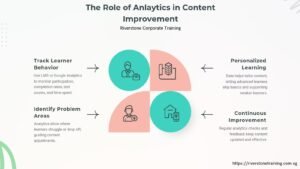
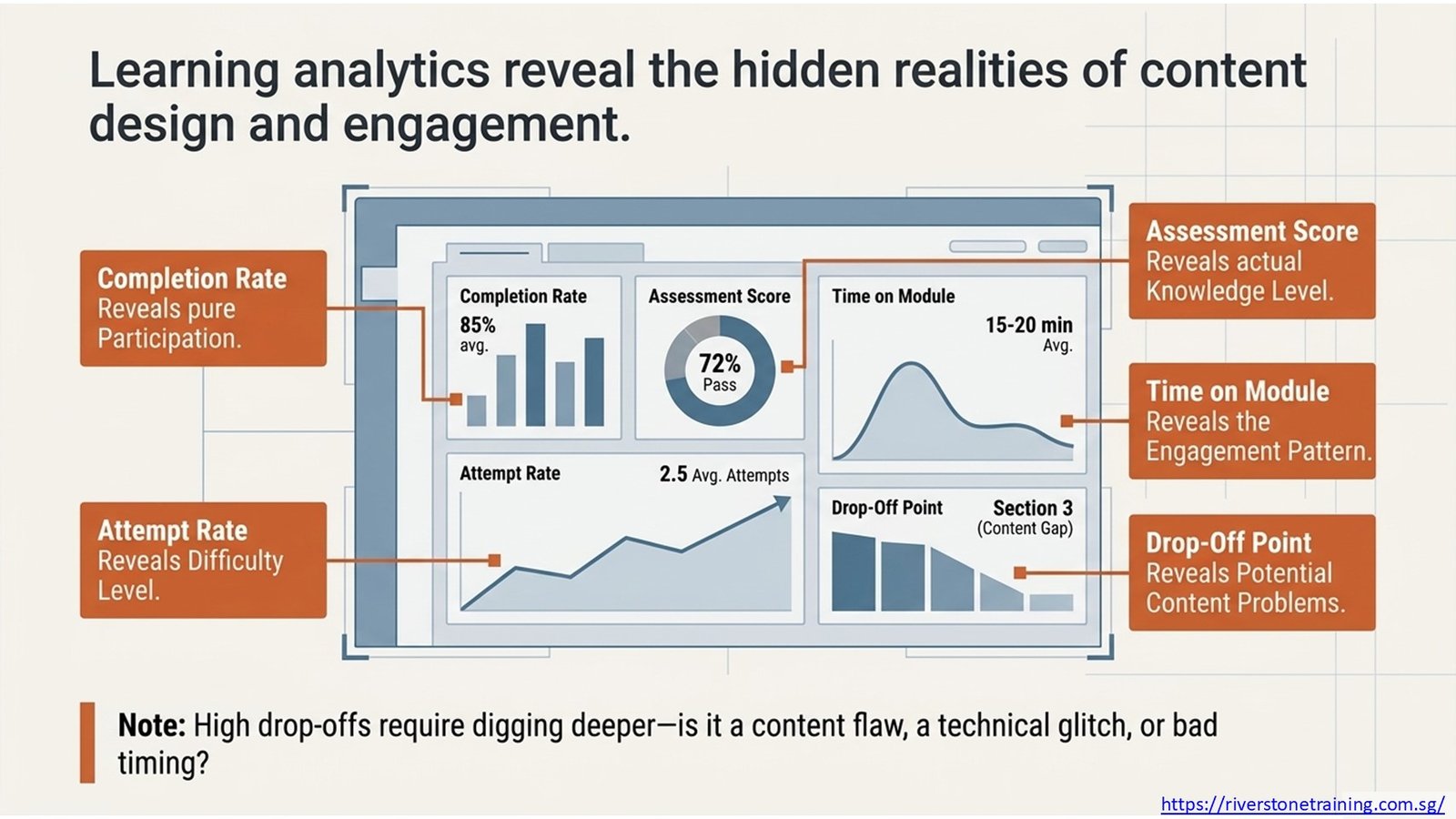
By mapping out challenging content, errors on tests, content that was not engaging, drop-off areas, and areas where workforces have gaps, learning analytics gives a deeper understanding of training performance for an organization. This information can also be used to identify successful learners and content areas that require improvement, providing a more comprehensive understanding of the strengths and weaknesses of the content.
Data can be used to make continuous improvements to training programmes, but cannot be seen in isolation as evidence of learning. For instance, a high drop-off rate may mean the content is a problem, the technical issue is a problem, or the module is simply at an inopportune time, and training managers need to dig deeper to determine the true source of the problem.
Table 3: Learning Analytics
| Metric | What It Can Show |
| Completion Rate | Participation |
| Assessment Score | Knowledge level |
| Drop-Off Point | Potential content problem |
| Attempt Rate | Difficulty level |
| Time on Module | Engagement pattern |
How Does E-Learning Support Consistent Training Delivery?
E-learning can be used to ensure that the core content, assessments, and learning objectives are delivered consistently to all employees, even those who work shifts and are in different locations. This is relevant especially for compliance training, onboarding, and other training programs where delivery is not consistent, which can pose regulatory or operational risk. A centralized course will eliminate the variance that occurs between different trainers teaching the course to students in person.
Imagine a company delivering employee training on compliance protocols using brief introductory training sessions, realistic scenarios, interactive knowledge checks, and end-of-training assessment and completion reporting. The content is centrally controlled and standardized, and training managers can be assured that all employees have experienced the same content, and use learning data and refreshers to identify employees to be reinforced.
When Is Fully Online Learning Better Than Blended Learning?
Fully online e-learning is effective when employees are spread out geographically, when content can be kept uniform and when training must be scalable and uniform. It also works for situations where the subject matter could be taught to students better without actual demonstration (e.g., policy changes, product knowledge, or basic compliance concepts where the learner needs to take in clear information and go through a structured evaluation process).
Blended learning tends to be better when a practical demonstration, hands-on practice, or complex discussion is significant to the learning objective. Courses that work well when an instructor is able to interact with students, and when workshops or coaching are an option, may incorporate some live sessions with some self-paced courses. Neither approach is automatically better; the comparison of Blended Learning vs E-Learning depends on learning objectives, employee needs, subject complexity, technology access, and the level of instructor interaction required.
The table below summarises how the two approaches typically compare across common training considerations.
Table: Blended Learning vs E-Learning
| Factor | Fully Online E-Learning | Blended Learning |
| Delivery | Primarily digital | Digital + instructor-led |
| Flexibility | High | Moderate to high |
| Instructor Interaction | Usually limited or virtual | Direct interaction available |
| Scalability | High | Depends on classroom capacity |
| Practical Training | Depends on digital design | Strong for hands-on activities |
| Discussion | Online | Online + face-to-face |
| Best For | Standardized and flexible learning | Complex or interactive learning |
In actuality, many organizations implement both models for the various content areas, with fully online for standard content and blended for content that relies heavily on practice or discussion.
How Can Organizations Scale E-Learning Across Their Workforce?
E-learning addresses the need for consistent content, central delivery and for trainers to be able to reach multiple workgroups without duplicating efforts; this is ideal for large and geographically dispersed organizations. This is especially useful for new employee training, refresher training, or standardized testing that must be disseminated to all employees by site or shift pattern.
Good content management, solid technical support, learner support, and continuous course maintenance are still needed for scalable solutions. If a course is successful with 50 employees, there may be issues with platform capacity, support, and/or content clarity that come to light when it is scaled up to several thousand employees.
What Role Does Personalization Play in E-Learning Effectiveness?
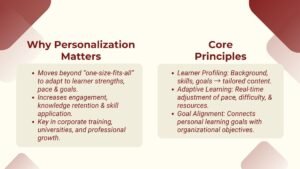
Personalized learning tailors content to the role, skill level, department, prior knowledge, job responsibilities and assessment performance of each employee to make sure that individual employees are spending time on content that is relevant to them. For instance, a finance manager could be looking for more advanced financial analysis content, while a new employee might need foundational finance concepts prior to deeper content.
Personalization should always be in tune with the learning goals of the organization, not for personalization’s sake. The aim is not to write a learning pathway for every learner but to ensure that learners are guided towards the content that is appropriate for them and their level of readiness, rather than to write so many learning pathways that they become hard to maintain and/or measure.
How Can Organizations Measure E-Learning Training Effectiveness?
There are a number of stages in evaluating the effectiveness of e-learning training. Metrics of participation (enrollment, attendance, completion) give an indication of whether employees are using training. Learning metrics like assessment scores, knowledge checks, and skill demonstrations show if the employees have truly absorbed the information or have just been through it.
Application metrics measure performance in the workplace, changes in behavior, and compliance with processes after training; business outcome measures are used where appropriate and measure productivity, error reduction, compliance improvement, customer service performance, or time savings. Measuring training effectiveness through completion rates is not sufficient, as the assessment should be based on participation, learning, application, and business outcomes.:
Table 5: Measuring Training Effectiveness
| Measurement | Example |
| Participation | Completion rate |
| Learning | Assessment results |
| Application | Workplace skill use |
| Performance | Error reduction |
| Business Outcome | Productivity improvement |
How Should Companies Design More Effective E-Learning Programs?
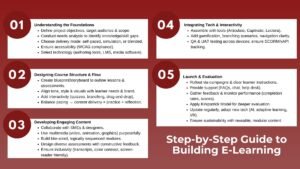
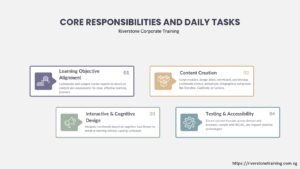
The process of creating a more effective digital course can be broken down into a few general steps: establishing the training need, setting learning goals, getting to know the intended learners, planning the course, designing suitable course content and introducing useful interaction points. From there, teams develop assessments, test the course, present it via a suitable platform, track learner data, collect feedback, and adjust the course content according to learner data.
Continuous improvement is important because employee needs, job requirements and regulatory expectations evolve over time and a course that may be effective at the time of launch can become obsolete within a year or two. It is very important to design the course starting with the learning outcome and assessing what technology and interaction would be required and not simply thinking about technology.
Conclusion
When organizations put together a learning experience of structured content, flexible access, meaningful interaction, assessments, feedback, progress tracking, and learning analytics, all together, it helps improve the effectiveness of e-learning training.
Technology is not the same as effective learning; the course needs to be structured in terms of clear learning goals, relevant content, needs, and measurable results of the learning. A learning content management system is useful to coordinate and manage online learning; some training purposes can be supported using a blended approach where online preparation is followed by face-to-face teaching.
Ultimately, the method of delivery, technology, and learning design should be chosen that best aligns with the organization’s employees, subject matter, and the desired results of the training.