Different Types of eLearning Microlearning Mobile Learning and More
Different Types of eLearning: Microlearning, Mobile Learning, and More
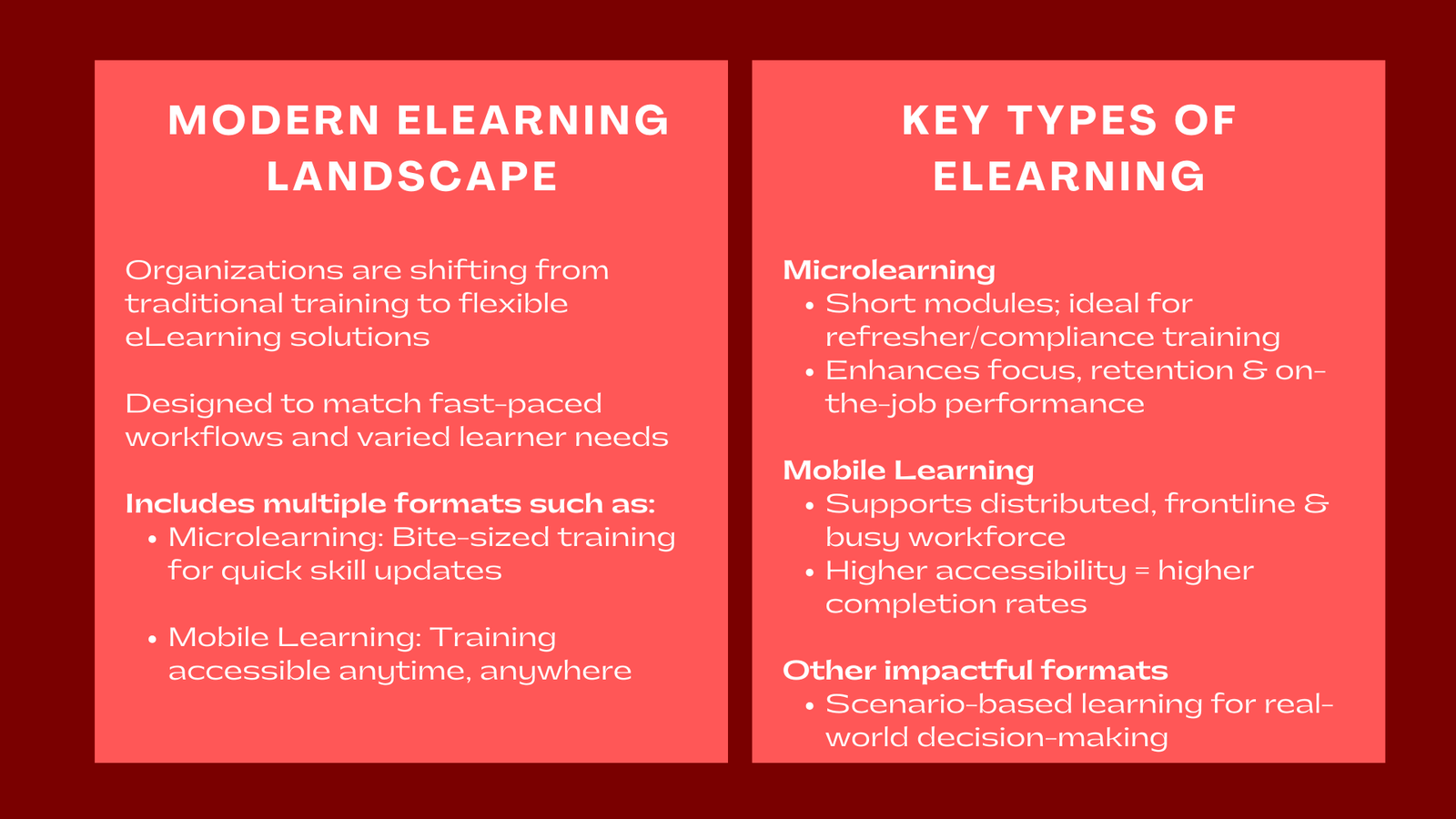
In today’s fast-changing digital learning environment, organizations are rethinking how training and education are delivered. Employees no longer have time for lengthy in-person seminars or traditional classroom sessions. Instead, companies are shifting toward eLearning, a flexible and scalable solution that fits modern workflows and enhances engagement.
From microlearning modules that deliver knowledge in bite-sized chunks to mobile learning solutions that enable learning on the go, the diversity of eLearning content development services has revolutionized how organizations design and implement their learning programs. Each type of eLearning comes with unique benefits and best-fit use cases—making it essential for training leaders to understand which approach aligns best with their goals.
This article explores the different types of eLearning—including microlearning, mobile learning, blended learning, scenario-based learning, and gamified eLearning—and how they can transform your digital training strategy.
1. Understanding eLearning and Its Role in Modern Education
Before diving into specific types, it’s important to understand what eLearning encompasses and why it’s now central to organizational learning strategies.
The Rise of eLearning in Corporate and Academic Settings
eLearning refers to the delivery of educational or training content through digital means, typically via online platforms or Learning Management Systems (LMS). Unlike traditional classroom training, eLearning offers flexibility, scalability, and personalization. It allows learners to access courses anytime, anywhere—on laptops, tablets, or smartphones.
With the support of elearning content development services, organizations can design interactive learning experiences that align with corporate goals, ensuring that employees gain practical skills that directly impact performance. These services integrate multimedia, interactivity, and modern instructional design to make digital learning both engaging and measurable.
The Strategic Importance of Choosing the Right eLearning Type
Not all eLearning is created equal. Depending on learning objectives, time constraints, and learner demographics, companies must select the right delivery format. For example, microlearning is ideal for quick, skill-based updates, while scenario-based learning works best for behavioral training. Selecting the right type ensures learners stay engaged, retention rates improve, and ROI from training investments is maximized.
2. Microlearning: Bite-Sized Learning for Busy Professionals
Microlearning is one of the most popular trends in the modern elearning content development process. It focuses on delivering content in short, focused bursts—typically lasting three to five minutes per module.
Why Microlearning Works
In the age of short attention spans and information overload, microlearning breaks complex concepts into small, manageable lessons. Learners can consume and apply the knowledge immediately without feeling overwhelmed. This makes it highly effective for busy professionals who prefer quick, targeted lessons rather than long courses.
Microlearning modules often include videos, infographics, interactive quizzes, or simulations. These formats promote active learning and retention while reducing cognitive fatigue. Additionally, microlearning supports just-in-time learning—where employees access content right when they need it, improving on-the-job performance.
Best Use Cases for Microlearning
Microlearning is particularly effective for compliance updates, product knowledge training, and refresher courses. For example, a sales team can complete a quick three-minute video on new product features before meeting clients. Similarly, HR teams can use microlearning for diversity and inclusion awareness campaigns.
Companies often collaborate with elearning content development services to design modular microlearning libraries that employees can access on-demand.
3. Mobile Learning: Training Anytime, Anywhere
Mobile learning (mLearning) takes flexibility to the next level by enabling learners to access courses via smartphones and tablets. It’s a natural evolution of eLearning, catering to the increasingly mobile workforce.
The Benefits of Mobile Learning
The primary advantage of mobile learning is accessibility. Learners can access training during commutes, coffee breaks, or travel. This flexibility encourages higher completion rates and engagement.
Moreover, mobile learning incorporates features like push notifications, gamification, and micro-assessments to sustain learner interest. Responsive course design ensures the content adjusts seamlessly across screen sizes and operating systems.
Professional elearning content development services specialize in optimizing content for mobile platforms. This involves designing lightweight media, ensuring faster load times, and integrating interactive elements suited for touch interfaces.
When to Use Mobile Learning
Mobile learning is ideal for organizations with distributed teams or frontline employees. Industries such as retail, hospitality, and logistics benefit significantly, as staff can access training without being tied to a desktop.
Mobile learning also complements blended learning strategies—where in-person sessions are supplemented with short digital lessons accessible on mobile devices.
4. Scenario-Based Learning: Building Skills Through Real-World Context
Scenario-based learning immerses learners in realistic situations, encouraging decision-making and critical thinking. It’s an interactive form of eLearning that replicates workplace challenges.
How Scenario-Based Learning Works
In this approach, learners are placed in a simulated environment where they must make decisions that lead to various outcomes. For example, in a customer service training module, a learner may choose how to respond to a dissatisfied customer, with each choice affecting the storyline.
This active participation reinforces experiential learning—where learners “learn by doing.” It improves retention and helps employees apply knowledge directly to real-world situations.
When to Use Scenario-Based Learning
Scenario-based learning is best suited for compliance, leadership, or soft-skills training where judgment and communication are key. Partnering with experienced elearning content development services ensures the scenarios are realistic, visually engaging, and instructionally sound.
Organizations in banking, healthcare, and sales often use this method to simulate complex decision-making processes.
5. Gamified Learning: Making Training Fun and Competitive
Gamified learning incorporates game elements—such as points, badges, leaderboards, and rewards—into eLearning modules. It taps into the natural human drive for competition and achievement.
The Psychology Behind Gamification
Gamification transforms passive learning into an engaging experience. It leverages behavioral psychology principles to motivate learners, sustain interest, and reinforce positive outcomes.
Employees earn points for completing modules, compete on leaderboards, and unlock rewards as they progress. These incentives not only improve participation rates but also encourage long-term knowledge retention.
Where Gamified Learning Works Best
Gamification works particularly well for onboarding, product training, and sales enablement. For instance, new hires can earn badges as they complete orientation modules, making the process both educational and enjoyable.
By using elearning content development services, organizations can integrate gamification mechanics that align with business goals—ensuring that engagement directly translates into performance improvement.
6. Blended Learning: Combining Digital and Instructor-Led Training
Blended learning merges the best of both worlds—traditional instructor-led sessions with modern eLearning modules.
How Blended Learning Works
This hybrid approach enables learners to gain foundational knowledge online before attending in-person or virtual workshops for deeper discussions. It provides flexibility without losing the value of human interaction.
For example, a leadership development program may include self-paced online lessons on communication followed by live role-play sessions facilitated by a coach.
Benefits of Blended Learning
Blended learning offers adaptability, cost efficiency, and personalization. Learners can progress at their own pace while still engaging with instructors for feedback and collaboration.
With the help of elearning content development services, companies can design cohesive blended programs that integrate seamlessly into their existing learning ecosystems, including Learning Management Systems (LMS).
7. Adaptive and Personalized Learning: Tailoring the Experience
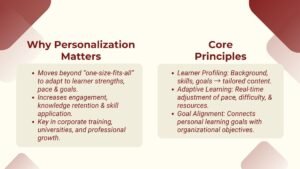
Adaptive learning uses artificial intelligence (AI) and data analytics to tailor the learning experience to each individual’s pace and skill level.
The Future of Personalized eLearning
Through algorithms and learner data, adaptive systems adjust content difficulty, skip known topics, or provide additional resources where learners struggle. This approach maximizes efficiency and engagement.
Personalized learning is ideal for large organizations where employees have diverse skill sets and roles. It ensures that everyone receives relevant, impactful training.
Professional elearning content development services can design adaptive learning frameworks that integrate with AI-based LMS platforms—making corporate training smarter and more efficient.
Conclusion to Different Types of eLearning Microlearning Mobile Learning and More
The digital learning landscape offers an incredible variety of eLearning types—each designed to address specific learning needs and business goals. From quick, impactful microlearning to flexible mobile learning, interactive scenario-based training, and motivational gamified learning, the possibilities are vast.
Choosing the right eLearning model depends on your organizational objectives, learner profiles, and available resources. For companies aiming to modernize their training, partnering with expert elearning content development servicesensures that courses are professionally designed, instructionally sound, and technologically optimized.
Ultimately, eLearning is more than a training solution—it’s a strategic tool for building a learning culture that drives performance, innovation, and growth. Whether you’re adopting custom microlearning content development services in Singapore or implementing mobile-friendly elearning content development for corporate training, the right approach can transform how your teams learn, adapt, and excel in the ever-evolving workplace.